Weight-Bearing Exercise and Bone Density: What Works, What Does Not and a Safe Plan
Weight-bearing exercise and bone density are closely linked, but the connection is often misunderstood. Many people are told to “do weight-bearing exercise” for their bones and assume a gentle stroll each day is enough. Walking is excellent for your heart and general health, but on its own it is usually not enough of a challenge to build much bone.
Bones are living tissue. They respond to the forces placed on them by getting stronger, much like muscles do, and they lose strength when they are not challenged. The key is the right type of force: impact and heavy, progressive muscle loading send the strongest signals for bone to build.
This guide explains how bone responds to exercise, the difference between weight-bearing and non-weight-bearing activity, what the research shows, the best exercises for bone density at different fitness levels, a safe weekly plan, and important safety notes if you already have osteopenia or osteoporosis.
At a glance
- Bone gets stronger when it is loaded with impact or heavy muscle forces
- Weight-bearing exercises keep you on your feet so your bones carry your body weight
- High-impact and progressive resistance training send the strongest bone-building signals
- Walking helps, but brisk walking alone produces only modest effects on bone density
- Swimming and cycling are excellent for fitness but do little for bone density
- Research shows supervised heavy resistance and impact training improved spine and hip bone density in postmenopausal women with low bone mass
- If you have osteoporosis, get personalised advice and avoid heavy forward bending and twisting
How bone responds to exercise
Bone is constantly being broken down and rebuilt. When you load it with forces it is not used to, bone-building cells are stimulated and the bone gradually becomes denser and stronger. When loading is low for long periods, such as during bed rest or very inactive lifestyles, bone is lost.
| Type of loading | Signal to bone | Example |
|---|---|---|
| Very low | Weak | Sitting, lying down |
| Low and repetitive | Mild | Easy walking |
| Moderate impact | Moderate | Brisk walking, stair climbing, jogging |
| High impact | Strong | Jumping, skipping, hopping |
| Heavy muscle forces | Strong | Squats, deadlifts, presses with challenging weights |
| Varied, unusual directions | Stronger | Changing direction, side steps, sports |
Two features make exercise more bone-friendly: high strain, meaning large forces, and unusual or varied loading, meaning movements your bones are not already used to every day.
Weight-bearing exercises vs non-weight-bearing exercise
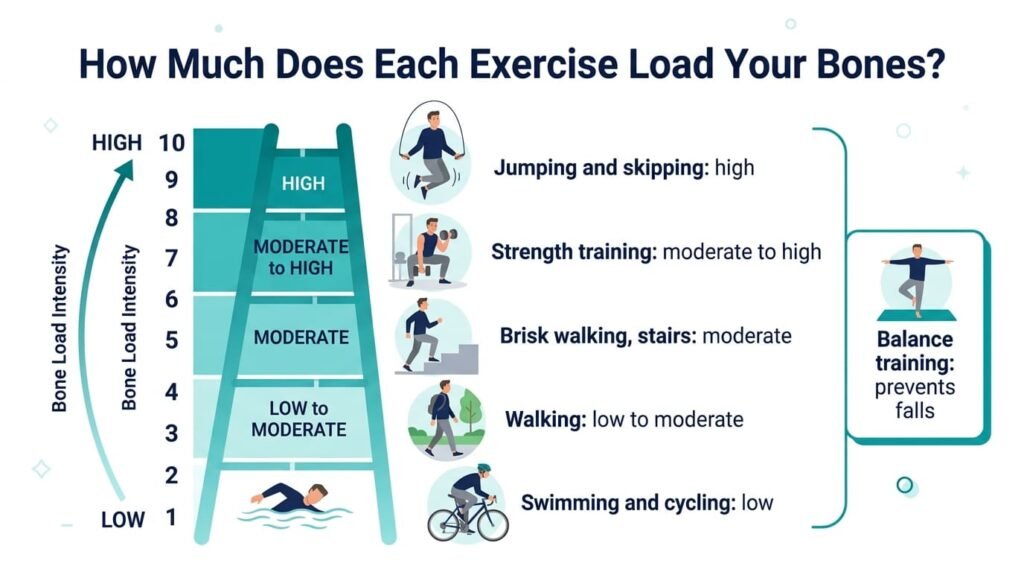
| Category | Examples | Bone benefit |
|---|---|---|
| High-impact weight-bearing | Jumping, skipping, jogging, racquet sports, dancing | High, if suitable for you |
| Low-impact weight-bearing | Walking, stair climbing, elliptical, step aerobics | Low to moderate |
| Resistance training | Squats, lunges, deadlifts, presses, rows | Moderate to high when progressive |
| Non-weight-bearing | Swimming, cycling, water exercise | Low for bone, excellent for heart and joints |
| Balance training | Tai chi, single leg balance | Little direct bone benefit, but reduces fall risk |
Weight-bearing exercises are activities you do on your feet, so your bones carry your body weight against gravity. Resistance training is not always weight-bearing, but the muscle pull on bone makes it one of the most effective exercises for bone density.
Swimming and water-based exercise are wonderful for fitness and painful joints, and our guide to water exercises for seniors covers them in detail. But because the water supports your body weight, they do little for bone density, so pair them with some land-based strength work.
What the research says about weight-bearing exercise and bone density
A Cochrane review of 43 randomised trials with 4,320 postmenopausal women found that exercise had a small but statistically significant and possibly important effect on bone density. Progressive resistance training for the legs was the most effective for the hip, and combination programmes worked best for the spine. The authors concluded that exercise has the potential to be a safe and effective way to avert bone loss.
The LIFTMOR trial tested something many people assumed was too risky. 101 postmenopausal women with low bone mass did either 8 months of supervised high-intensity resistance and impact training (5 sets of 5 heavy reps of deadlifts, squats and overhead presses, plus jumping chin-ups with drop landings) twice a week, or a low-intensity home programme. The high-intensity group improved lumbar spine bone density by 2.9 percent, compared with a 1.2 percent loss in the control group, and also improved hip bone density, physical function and height. Only one minor adverse event was reported.
Two important points: the LIFTMOR programme was carefully supervised and built up gradually, and the participants were screened first. It shows what is possible, not a plan to copy alone on day one.
The best exercises for bone density and exercise for osteoporosis prevention
Impact exercises
| Exercise | Level | Notes |
|---|---|---|
| Heel drops | Very gentle | Rise onto your toes, drop onto your heels, 10 to 20 times |
| Marching with stamps | Gentle | Firm stamps on the spot |
| Stair climbing | Gentle to moderate | Use the handrail |
| Low hops on the spot | Moderate | Small, soft landings |
| Skipping | Moderate to high | Short intervals. See our how to jump rope guide |
| Jumping jacks | Moderate to high | Land softly |
| Box step-downs and small jumps | High | For fit, healthy bones only. See our plyo box exercises |
Bone responds mostly to the size of the force rather than the number of repetitions, so a modest number of jumps, often 10 to 50 a day, is commonly recommended. You do not need hundreds.
Resistance exercises
| Exercise | Bones targeted | Notes |
|---|---|---|
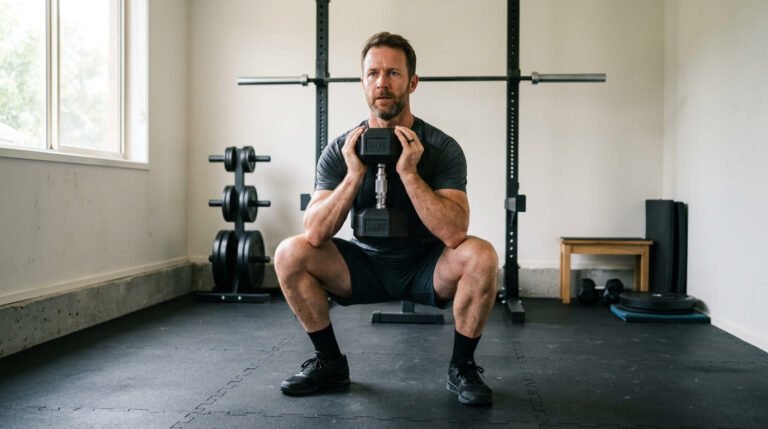
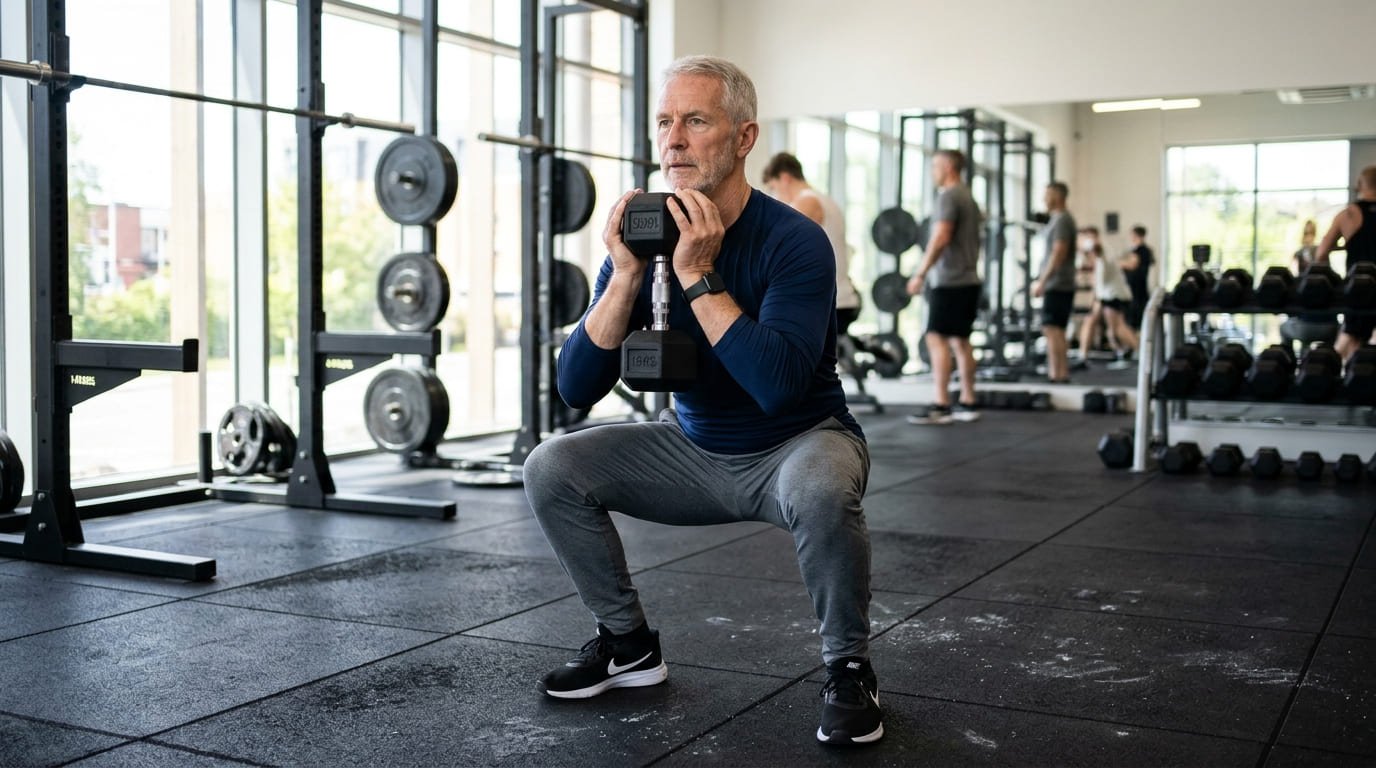
| Squats or sit-to-stands | Hips, spine, legs | Start with a chair, then add weight |
| Lunges and step-ups | Hips, legs | Hold support at first |
| Deadlifts or hip hinges | Hips, spine | Learn technique carefully, flat back |
| Overhead press | Spine, arms | Light at first |
| Rows | Spine, upper back | Supports good posture |
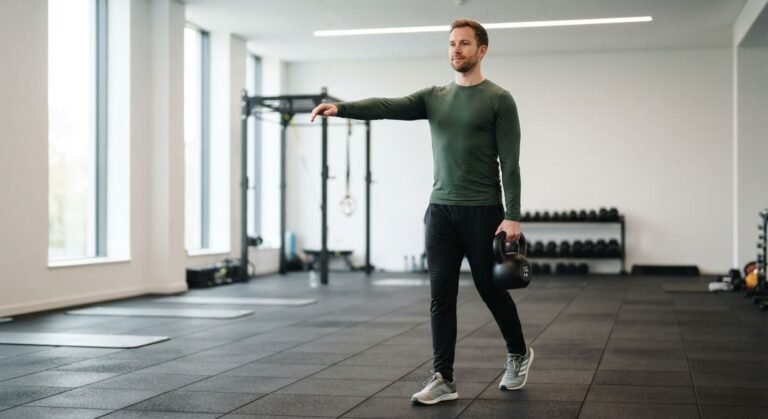
| Farmer’s carry | Whole body | Our farmers carry guide covers technique |
| Calf raises | Lower legs | Simple and effective |
Progressive resistance means gradually increasing the weight over weeks and months. For bone, the load should eventually feel challenging, typically 8 to 12 reps for beginners, moving toward heavier sets of 5 to 8 reps under guidance.
Balance and posture exercises
Balance exercises do not build much bone, but they reduce your risk of falling, and falls cause most fractures. Single leg stands, heel-to-toe walking and tai chi are all useful. Back extensor strengthening, such as gentle prone back raises, supports upright posture. Our guides to balance board exercises and core exercises for seniors include safe options.
Is walking enough? Weight-bearing exercise and bone density in everyday life
Walking is a weight-bearing exercise and brings huge health benefits. But for bone, it is a fairly mild signal, because your bones are already used to it every day. Brisk walking, hill walking, stair climbing and adding short bursts of faster pace all make it more bone-friendly. For the best results, combine walking with strength training and, if suitable, some impact. Our walking guide has a simple progressive plan.
A weekly plan of weight-bearing exercises for stronger bones
| Day | Session |
|---|---|
| Monday | Strength: sit-to-stands or squats, step-ups, rows, overhead press, calf raises (20 to 30 minutes) |
| Tuesday | Brisk walk 30 minutes, including stairs or hills, plus 20 heel drops |
| Wednesday | Balance practice 10 minutes and a gentle walk |
| Thursday | Strength: as Monday, gradually increasing weight |
| Friday | Brisk walk 30 minutes plus 20 to 50 low hops or skipping if suitable |
| Saturday | Active hobby: dancing, racquet sports, hiking |
| Sunday | Rest or easy walk |
If you are new to exercise
| Weeks | Strength | Impact | Walking |
|---|---|---|---|
| 1 to 4 | Sit-to-stands, wall push-ups, band rows, 2 x 10 | Heel drops, 10 a day | 20 minutes most days |
| 5 to 8 | Add step-ups and light dumbbells, 2 to 3 x 10 | Heel drops and marching stamps | 30 minutes brisk |
| 9 to 12 | Goblet squats, lunges with support, heavier rows | Low hops if cleared | Add hills or stairs |
Our leg exercises for seniors guide has more beginner-friendly strength options, and our beginner dumbbell workout plan shows how to progress weights safely.
Exercise for osteoporosis: safety first
If you already have osteoporosis or have had a fragility fracture, exercise is still strongly recommended, but the approach needs care.
| Generally recommended | Use caution or avoid without guidance |
|---|---|
| Progressive strength training with good form | Heavy loaded forward bending, such as toe touches with weights |
| Walking and stair climbing | Repeated full sit-ups and crunches |
| Balance training | Fast, loaded twisting of the spine |
| Posture and back extensor exercises | High-impact jumping if you have spinal fractures or very low bone density |
| Moderate impact if cleared by your doctor | Activities with a high risk of falling |
Ask your doctor or a physiotherapist experienced in bone health before starting, especially if you have had a vertebral fracture. They can help you choose impact levels and lifting technique that are safe for you.
This article is general information, not medical advice. See our medical disclaimer.
Nutrition for bone health
Exercise works best alongside good nutrition:
- Calcium from dairy foods, fortified plant milks, tinned fish with bones, leafy greens and tofu
- Vitamin D from sunlight, oily fish, eggs and, if advised, supplements
- Protein at every meal to support bone and muscle
- Avoid smoking and keep alcohol moderate
Your doctor can check whether you need supplements or a bone density scan.
Weight-bearing exercise and bone density at different ages
| Age | Bone focus | Best activities |
|---|---|---|
| Children and teenagers | Building peak bone mass | Running, jumping, ball games, skipping |
| 20s and 30s | Reaching and maintaining peak bone mass | Strength training, impact sports |
| 40s and 50s | Slowing early bone loss | Progressive strength training, brisk walking, some impact |
| 60s and beyond | Maintaining bone and preventing falls | Strength, balance, walking, safe impact if suitable |
It is never too early or too late. Children who are active build stronger skeletons for life, and older adults can still slow bone loss and greatly reduce their risk of falls.
Common mistakes
| Mistake | Why it matters | Fix |
|---|---|---|
| Relying only on walking | Modest bone signal | Add strength training and impact if suitable |
| Only swimming or cycling | Little bone loading | Add land-based strength work |
| Never increasing the weight | Bones adapt and stop responding | Progress gradually |
| Doing hundreds of jumps | Not needed, higher injury risk | 10 to 50 good jumps is enough |
| Ignoring balance | Falls cause most fractures | Practise balance a few times a week |
| Starting heavy without guidance | Injury risk | Build up slowly, get supervision if possible |
Weight-bearing exercise and bone density in men
Osteoporosis is often thought of as a women’s condition, but men lose bone too, especially after 50 and with low testosterone, smoking, heavy drinking, long-term steroid use or very low activity. The same principles apply: weight-bearing exercise and bone density are linked for men just as for women. Progressive strength training, some impact if suitable, and brisk walking are the foundation. Men who have spent years doing only cycling or swimming may especially benefit from adding land-based strength work.
Weight-bearing exercises at home
You do not need a gym to load your bones. These weight-bearing exercises at home cover the basics:
| Exercise | Equipment | Dose |
|---|---|---|
| Sit-to-stands | A sturdy chair | 3 x 10 |
| Heel drops | None | 2 x 10 to 20 |
| Step-ups on the bottom stair | Stairs and a handrail | 2 x 10 per leg |
| Wall push-ups or knee push-ups | Wall or floor | 2 x 10 |
| Band rows | Resistance band | 2 x 12 |
| Calf raises | A step or wall | 2 x 15 |
| Marching with stamps | None | 1 minute |
| Carrying shopping bags | Two bags | A few minutes |
Start with the easier options and progress to dumbbells and harder movements over time.
Myths about exercise and bones
| Myth | The reality |
|---|---|
| Older people should avoid lifting | Carefully progressed strength training is one of the best things for older bones |
| Walking is all you need | It helps, but strength training and impact give stronger signals |
| Swimming builds bone | It is great for fitness, but does little for bone density |
| More jumps are always better | Bone responds to the size of the force, so a modest number is enough |
| Once you have osteoporosis, exercise is dangerous | Most people with osteoporosis benefit from suitable, guided exercise |
Tracking your progress
Bone density changes slowly and is measured with a DXA scan, usually no more than every couple of years. In the meantime, track what you can control: the weights you lift, your walking pace and distance, how long you can balance on one leg, and how easily you rise from a chair. Improvements in these usually mean your bones and muscles are getting a useful training signal.
Making it a habit
Exercises for bone density only work if you keep doing them for months and years. Choose activities you enjoy, such as dancing, hiking, tennis or a strength class, and build them into your weekly routine. Training with a friend or in a supervised group can make it easier to stay consistent and to progress safely.
Questions to ask your doctor
If you are concerned about weight-bearing exercise and bone density, these questions can help you get personalised advice:
- Do I need a bone density (DXA) scan?
- What is my fracture risk, and how does it change the exercise I should do?
- Is high-impact exercise safe for me?
- Are there any movements I should avoid?
- Should I take calcium or vitamin D supplements?
- Would a referral to a physiotherapist or a supervised exercise class help?
Bringing a written list makes appointments easier and helps you leave with a clear, safe plan.
The value of supervised classes
Many community centres, gyms and hospitals run strength and balance classes designed for bone health. They are a great way to learn technique, progress safely and stay motivated. The LIFTMOR trial, for example, used supervised sessions, which is one reason heavy lifting was safe for participants with low bone mass. If you have osteoporosis, a supervised class is often the best way to start exercise for osteoporosis safely.
Weight-bearing exercise and bone density at a glance
| Goal | What to do each week |
|---|---|
| Build or maintain bone | 2 to 3 progressive strength sessions |
| Add impact if suitable | 10 to 50 jumps or hops on most days, or brisk walking with stairs and hills |
| Prevent falls | Balance practice 3 or more times |
| Support the process | Calcium, vitamin D, protein, no smoking |
| Stay consistent | Months and years, not weeks |
Keep this simple table in mind and you have the core of what research says about weight-bearing exercise and bone density.
Where to start this week
If all of this feels like a lot, start small. This week, do sit-to-stands and heel drops on three days, and take two brisk walks with a hill or some stairs. Next week, add band rows and step-ups. That is weight-bearing exercise and bone density work in its simplest form, and it is far better than waiting for the perfect plan.
Encourage the whole family
Bone health is a lifelong project. Children who run, jump and play sports build stronger bones that protect them decades later, and parents who stay active set the example. Making weight-bearing exercise and bone density part of family life, through walks, games, dancing and active weekends, benefits everyone.
Footwear and surfaces
Supportive trainers with good grip make walking, stair climbing and impact work safer. For jumping or skipping, a firm, slightly forgiving surface such as a wooden floor or a mat is kinder to your joints than concrete.
The bottom line
Weight-bearing exercise and bone density go hand in hand, but the type of weight-bearing exercise matters. Bones respond best to impact and progressively heavier strength training. Walking helps, swimming and cycling help your heart more than your bones, and balance training protects you from the falls that cause fractures.
A sensible plan combines two strength sessions a week, brisk walking, a small dose of impact if it is safe for you, and regular balance practice, supported by calcium, vitamin D and protein. If you have osteoporosis, get personalised guidance, then build up gradually. Stronger bones are built one session at a time, at any age.
Frequently asked questions
What is the best weight-bearing exercise for bone density?
A combination of progressive strength training and impact activities such as jumping, skipping or jogging, if suitable for you. Brisk walking and stair climbing are gentler options.
Does walking increase bone density?
Walking helps maintain bone and overall health, but on its own its effect on bone density is modest. Brisk walking, hills and stairs help more, especially when combined with strength training.
Is swimming good for bone density?
Swimming is excellent for fitness and joints but does little for bone density because the water supports your body weight. Add land-based strength work for your bones.
How often should I do exercises for bone density?
Aim for strength training two or three times a week, weight-bearing activity most days, and balance practice several times a week.
Can exercise reverse osteoporosis?
Exercise can slow bone loss and sometimes modestly improve bone density, and it greatly reduces fall risk. It works best alongside medical treatment and good nutrition. Discuss your plan with your doctor.
Is lifting heavy weights safe with osteoporosis?
Research suggests carefully supervised, progressive heavy training can be safe and effective for some people with low bone mass. Get assessed and supervised before lifting heavy.
How many jumps a day help bone density?
Bone responds mainly to the size of the force, not the number of repetitions, so around 10 to 50 good jumps a day is commonly recommended rather than hundreds.
What exercises should I avoid with osteoporosis?
Avoid heavy loaded forward bending, repeated sit-ups, fast loaded twisting and high-impact jumping if you have spinal fractures or very low bone density, unless a professional advises otherwise.
How long does it take for exercise to improve bone density?
Bone changes slowly. Most studies run for 6 to 12 months before measuring changes in bone density, so consistency over many months is key.
What’s next?
Reading is the easy part. Pick one of these and do it today.