No-Equipment Beginner Workout Routine (Full-Body Plan)
You can build real strength and fitness at home with nothing but your own body weight. This no-equipment routine gives beginners a complete, repeatable full-body plan: six simple exercises, a clear weekly schedule, and easy ways to progress as you get stronger. No gym, no gear, no experience needed.
The routine: warm up, then do 1 to 3 rounds of 6 bodyweight moves (squats, incline push-ups, glute bridges, reverse lunges, bird-dog, modified plank), 2 to 3 times a week. Rest a day between sessions and add rounds as it gets easier.
Can you really get fit with no equipment?
Yes, especially as a beginner. Your body weight provides plenty of resistance to build strength, stamina, and confidence, and bodyweight moves work several muscles at once. Equipment can add variety later, but it is genuinely optional when you are starting out. If you want to weigh up your options, see our free tools and the full home workouts for beginners guide.
Warm up first (3 minutes)
Never skip this. March in place, roll your shoulders, do slow arm circles, gentle torso twists, and easy leg swings. Follow our beginner warm-up routine if you want a step-by-step.
The 6-move no-equipment routine
Do each exercise for the reps below, resting 30 to 60 seconds between them. That is one round. Start with one round and build toward three over a few weeks.
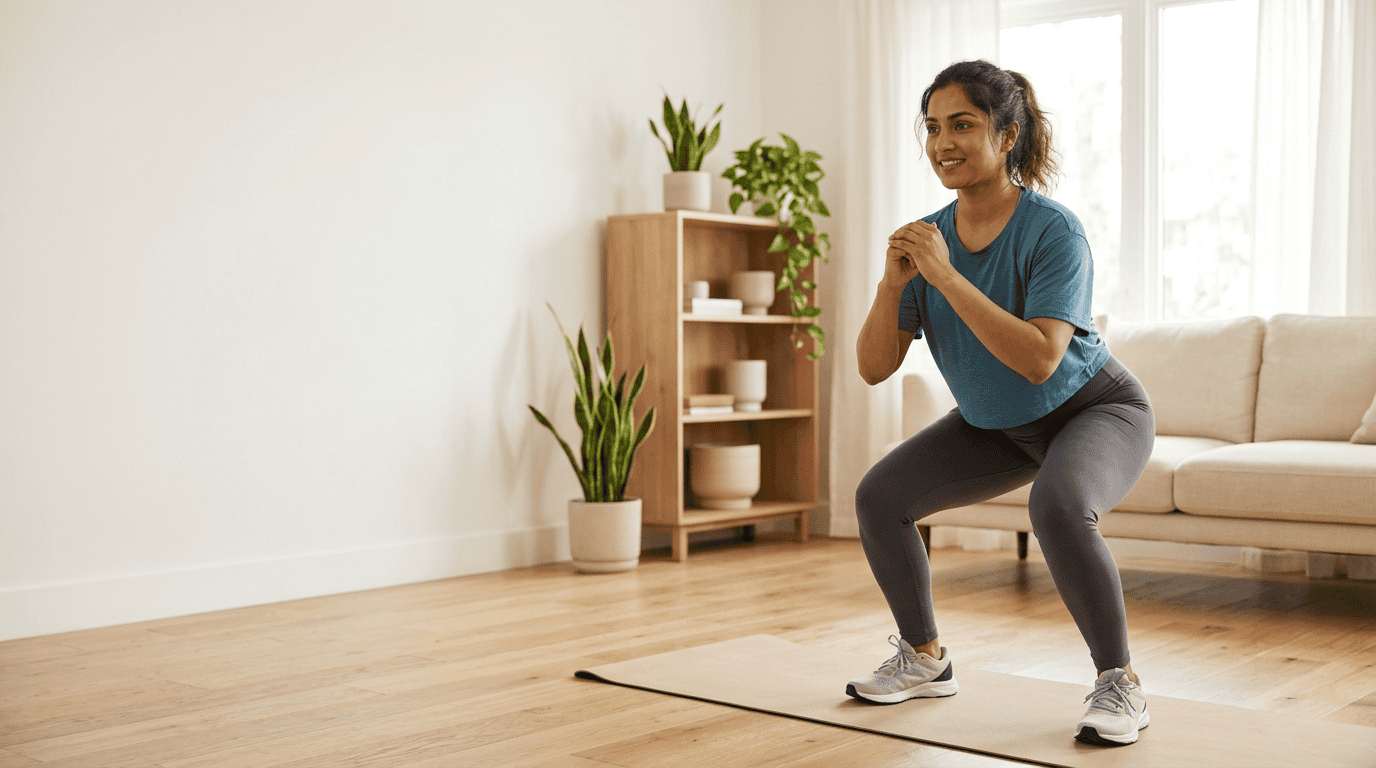
- Bodyweight squats (8 to 12): hips back and down like sitting into a chair, chest up. Easier: tap a chair each rep.
- Incline push-ups (6 to 10): hands on a wall or counter, body straight, lower and push back. More upright is easier.
- Glute bridges (10 to 12): on your back, squeeze your glutes and lift your hips, then lower slowly.
- Reverse lunges (5 to 8 per leg): step one foot back and lower gently, then return. Hold a wall for balance if needed.
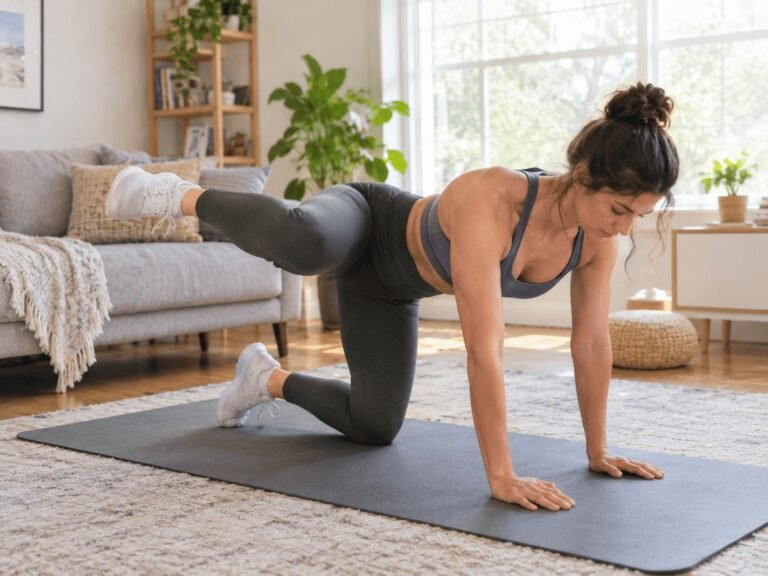
- Bird-dog (6 to 8 per side): on hands and knees, extend opposite arm and leg, keeping hips level.
- Modified plank (10 to 20 seconds): straight line from head to knees, core tight, breathing steadily.
Finish with two or three minutes of gentle stretching. Every move can be made easier, so scale it to how you feel today. For a quicker option, try the 15-minute full-body workout, or focus your legs with a beginner leg workout.
Your weekly plan
| Week | Sessions | Rounds |
|---|---|---|
| Weeks 1–2 | 2 per week | 1 round |
| Weeks 3–4 | 2–3 per week | 2 rounds |
| Week 5+ | 3 per week | 2–3 rounds |
Listen to your body. This is general information, not medical advice. Mild soreness is normal; sharp pain, dizziness, or chest pain means stop and rest. Check with your doctor first if you have a health condition, are pregnant, or you’re unsure.
How to progress without adding equipment
You do not need weights to keep improving. Add a round, add reps, slow each movement down, shorten your rests, or move to a slightly harder version of a move (for example, lowering your push-up angle). Small, steady steps beat big jumps. Read more about how often to train and how to stay consistent.
Want the same idea with exact sets, reps and a weekly schedule? See the full-body workout for beginners.
Once this routine starts to feel familiar, the deck of cards workout is a fun way to use the same no-equipment exercises in a random, game-like order.
Travelling and short on space? Our hotel room workout guide has four routines built for a small room, including a completely silent one.
Frequently asked questions
Can you build muscle without any equipment?
Beginners can build noticeable strength and some muscle with bodyweight training alone, because your own weight is enough resistance at first. As you advance, progress by making moves harder or adding light resistance like bands.
Is a no-equipment home workout as good as the gym?
For a beginner, a consistent bodyweight routine at home delivers real results in strength and fitness. The gym offers more ways to add resistance later, but it is not required to start or to make solid early progress.
How long until I see results?
Most beginners feel more energy and better mood within a week or two, with visible strength and body changes usually taking a couple of months of consistency. Focus on showing up regularly.
What if I can’t do a push-up yet?
That is completely normal. Start with the most upright incline push-up you can, against a wall if needed, and lower the angle over time as you get stronger. Everyone starts somewhere.
Do I need a mat?
No, but a mat, rug, or folded towel makes floor moves like glute bridges and planks more comfortable. It is a nice-to-have, not a requirement.
Related articles
- Home Workouts for Beginners: The Complete Guide
- 15-Minute Full-Body Home Workout
- Beginner Leg Workout at Home
- How to Start Working Out at Home
Explore more beginner guides in Home Workouts.
Free tools to plan your progress
Put real numbers to your goals with our free, no-sign-up beginner calculators:
- Calories Burned Calculator, calories burned by any activity.
- Calorie Calculator, how many calories to eat for your goal.