15-Minute Full-Body Home Workout for Beginners (No Equipment)
Short on time? You can get a genuinely effective full-body workout in just 15 minutes, at home, with no equipment. This beginner routine warms you up, works your whole body with five simple moves, and cools you down, all in a quarter of an hour. Every exercise has an easier option, so you can start exactly where you are.
The workout at a glance: 2-minute warm-up, then 2 rounds of 5 moves (squats, incline push-ups, glute bridges, standing knee lifts, modified plank), working about 40 seconds per move with short rests, finished with a 1-minute stretch. Total: about 15 minutes.
Before you start
Clear a small space, grab some water, and put on clothes you can move in. That’s all you need. Move at your own pace, breathe steadily, and pause whenever you need to. If you’re brand new, it’s worth reading how to start working out at home first for the bigger picture.
Step 1: Warm up (2 minutes)
March in place for 30 seconds, roll your shoulders, make slow arm circles, and do a few gentle side-to-side steps. You want to feel warmer and looser, not tired. Need a full routine? Here’s our beginner warm-up.
Step 2: The 15-minute circuit
Do each move for about 40 seconds, then rest 20 seconds before the next one. After all five, rest for a minute, then repeat the whole thing once more. That’s two rounds. Beginners can start with a single round and build up.
1. Bodyweight squats
Feet shoulder-width apart, sit your hips back like you’re lowering into a chair, chest up, then stand. Easier: tap a real chair with your bum each rep. How it should feel: your thighs and glutes working, never sharp knee pain.
2. Incline push-ups
Hands on a wall, counter, or sturdy table, body in a straight line, bend your elbows to lower your chest, then push back. The more upright you are, the easier it is. How it should feel: chest, shoulders, and arms working.
3. Glute bridges
Lie on your back, knees bent, feet flat. Squeeze your glutes and lift your hips into a straight line from knees to shoulders, then lower slowly. How it should feel: glutes doing the work, not your lower back.
4. Standing knee lifts
March on the spot, lifting each knee toward hip height in a slow, controlled way. Hold a wall for balance if needed. This gently raises your heart rate and works your core.
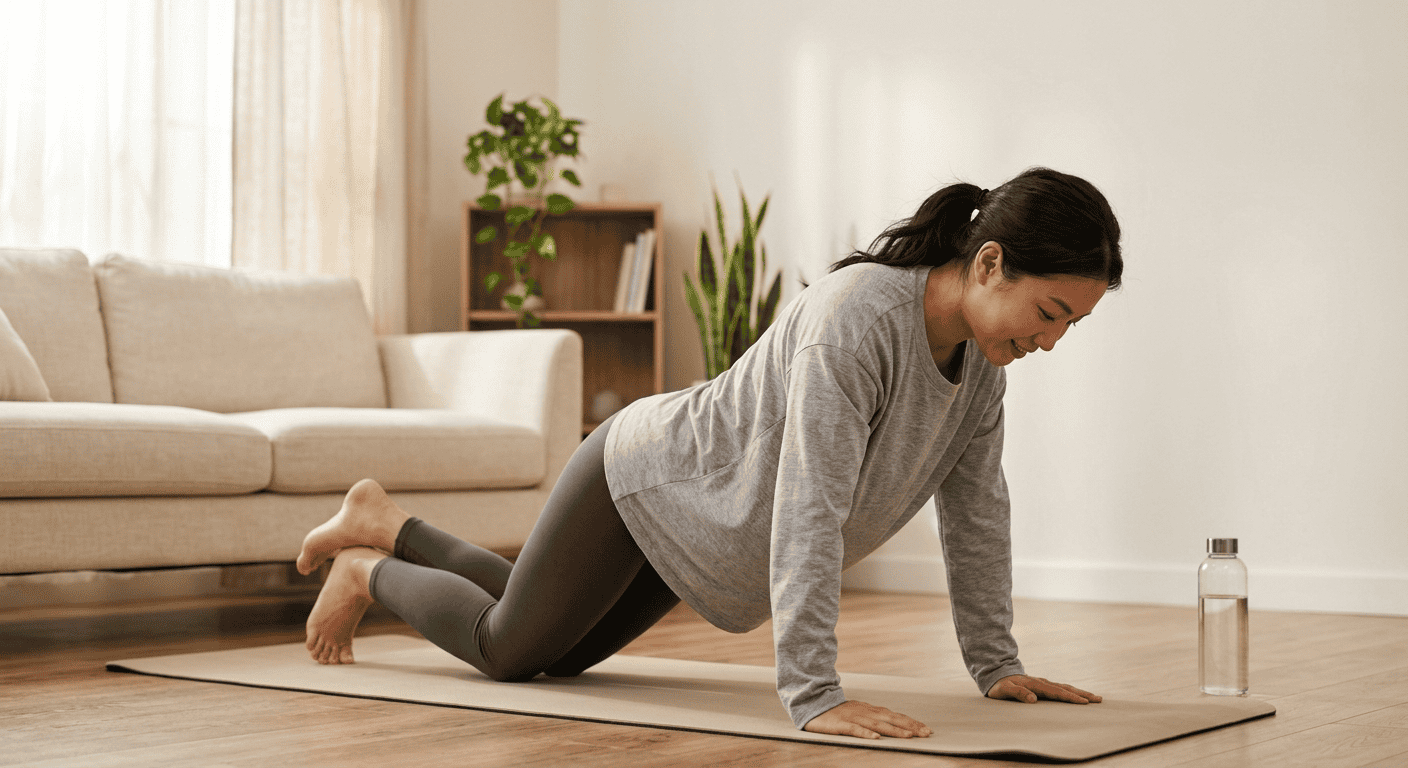
5. Modified plank
From your hands and knees, hold a straight line from head to knees, core tight, breathing steadily. Easier: hold a standing plank leaning into a wall.
Step 3: Cool down (1 minute)
Reach for your toes, open your chest, and stretch your thighs and calves with a few slow breaths. A short warm-up and cool-down makes a real difference to how you feel afterward.
Listen to your body. This is general information, not medical advice. Mild muscle fatigue is normal; sharp pain, dizziness, or chest pain means stop. If you have a health condition, are pregnant, or you’re unsure, check with your doctor first.
Is a 15-minute workout enough?
For a beginner, yes. Fifteen focused minutes, done three or four times a week, is genuinely enough to build strength, improve your fitness and establish the habit. It beats an hour you do once and then dread repeating.
The reason it works is that beginners adapt quickly to almost any consistent stimulus. Your body is not comparing your session to an athlete’s, it is comparing it to doing nothing. Going from zero to 45 minutes a week of proper strength work is a large change, and your body responds accordingly.
Where 15 minutes eventually falls short is later on. Once you have trained consistently for six months or so you will need more volume to keep progressing, and sessions naturally stretch toward 30 or 40 minutes. That is a problem for future you. Right now, the shortest session you will actually repeat is the best one.
One honest caveat: 15 minutes of strength work does not replace general daily movement. Pair it with walking on the days between and you have a genuinely complete beginner week.
What 15 minutes can realistically do
- Build real strength. Within four to six weeks you will manage noticeably more reps, and everyday things like stairs and carrying shopping get easier.
- Burn roughly 70 to 130 calories depending on your body weight and effort. Useful, though not the main reason to do it.
- Protect your muscle if you are losing weight, which stops your daily calorie burn from dropping.
- Establish the habit, which is what actually decides whether you are still training in six months.
What it will not do on its own is transform how you look. That takes months of consistency plus attention to what you eat, as covered in how long it takes to see workout results.
How to fit 15 minutes into a busy day
The appeal of a short workout is that it removes the usual excuse. A few things that make it stick:
- Attach it to something you already do. Straight after your morning coffee, or before your evening shower. A fixed anchor beats a vague intention.
- Do it in what you are wearing. Waiting until you are changed into proper kit has ended more workouts than tiredness ever has.
- Leave the mat out. Removing one small step matters more than motivation does.
- Split it if you must. One round in the morning and one in the evening still counts as a full session.
Other 15-minute workouts to try
Once this routine feels familiar, rotating between a few short sessions keeps things interesting without adding time:
- 15-minute ab workout, a timed core session with no crunches.
- Beginner dumbbell plan, which includes a 15-minute version if you own a pair of dumbbells.
- Low-impact cardio, a 15-minute session with no jumping.
- 10-minute morning workout, for days when even 15 is a stretch.
How to make it harder over time
When two rounds feel easy, add a third round, add a few reps, or slow each movement down to make your muscles work longer. That steady, gentle build is the whole secret. Want variety? Try the full no-equipment beginner routine or a focused beginner leg workout.
Common mistakes in a short workout
- Rushing the reps to fit more in. A short workout is not a race. Fewer controlled reps beat a blur of fast ones, and speed is where form and safety go.
- Skipping the warm-up to save time. Two minutes out of fifteen is well spent. Going straight into squats cold is how beginners tweak something.
- Cutting the rests to nothing. The short rests are what let you work hard in the sets that follow. Without them it becomes mediocre cardio rather than strength work.
- Doing it every single day. Even short sessions need recovery. Three or four days a week is the sweet spot, with walking in between.
- Treating it as second best. A 15-minute session you repeat for six months will do more for you than the hour-long plan you abandon in week two.
A few more worth avoiding are in common beginner workout mistakes.
Training with your partner, family or housemates? See the best group exercises at home, each with three difficulty levels.
For the lighter daily baseline between sessions, see 7 exercises to do every day.
Squats do more than you might think in a session this short. See what muscles squats work.
If push-ups are the hard part here, see incline and decline push-ups.
For a core movement that fits neatly into this circuit, see plank shoulder taps.
Frequently asked questions
Is a 15-minute workout enough for beginners?
Yes. For a beginner, a focused 15-minute full-body session done consistently is genuinely effective for building strength and a routine. Short and regular beats long and occasional, and you can add rounds as you progress.
Can you build muscle with a bodyweight workout?
For beginners, yes. Your own body weight provides enough resistance to build noticeable strength and muscle early on. As you get stronger, you progress by adding reps, rounds, or slower tempos, and later by adding resistance bands or weights if you want.
How many times a week should I do this workout?
Two or three times a week, with a rest day in between, works well for most beginners. See how often a beginner should work out for more.
Can I do this workout every day?
It’s better not to, at least at first. Your muscles get stronger during rest, so leave a day between sessions. A gentle walk on your off days is a great way to stay active.
Will this workout help me lose weight?
Regular movement helps, but weight loss depends mostly on your overall habits, including what you eat, your sleep, and how active you are day to day. Think of this workout as one helpful piece of a bigger, sustainable routine.
Is a 15 minute workout at home effective?
Yes, especially for beginners. A structured 15 minutes of full-body strength work three or four times a week builds real strength and fitness. Consistency matters far more than session length when you are starting out.
How many calories does a 15-minute workout burn?
Roughly 70 to 130 calories for most people, depending on body weight and how hard you work. Treat that as a bonus rather than the main benefit, since the strength and habit gains matter more.
Can I do a 15-minute workout with no equipment?
Yes. This routine uses only your body weight plus a wall or sturdy surface for the incline push-ups. No mat, dumbbells or bands are required, though a folded towel makes floor work comfier.
Is 15 minutes a day enough exercise?
For strength work, 15 minutes three or four times a week is plenty as a beginner. For general health, add walking on the other days so you reach roughly 150 minutes of moderate movement per week.
Related articles
- Home Workouts for Beginners: The Complete Guide
- How to Start Working Out at Home (Step-by-Step)
- No-Equipment Beginner Workout Routine
- Beginner Leg Workout at Home
- 10-Minute Morning Workout for Beginners
Explore more beginner guides in Home Workouts.
Free tools to plan your progress
Put real numbers to your goals with our free, no-sign-up beginner calculators:
- Calories Burned Calculator, calories burned by any activity.
- Calorie Calculator, how many calories to eat for your goal.


