How to Start Working Out at Home (Step-by-Step for Beginners)
Starting to work out at home is simpler than it looks. You don’t need a gym, any equipment, or a shred of experience. To begin, clear a small space, put on comfortable clothes, warm up for a few minutes, do a short beginner routine two or three times a week, and rest in between. That’s genuinely the whole formula.
If that already feels doable, good, because it is. This guide walks you through every step so your very first workout feels easy instead of overwhelming.
The short version: To start working out at home, (1) clear a small space, (2) warm up for 3 to 5 minutes, (3) do a short bodyweight routine, (4) cool down and stretch, and (5) repeat two or three times a week. Start easy and build slowly.
Step 1: Set up your space and gear (you barely need any)
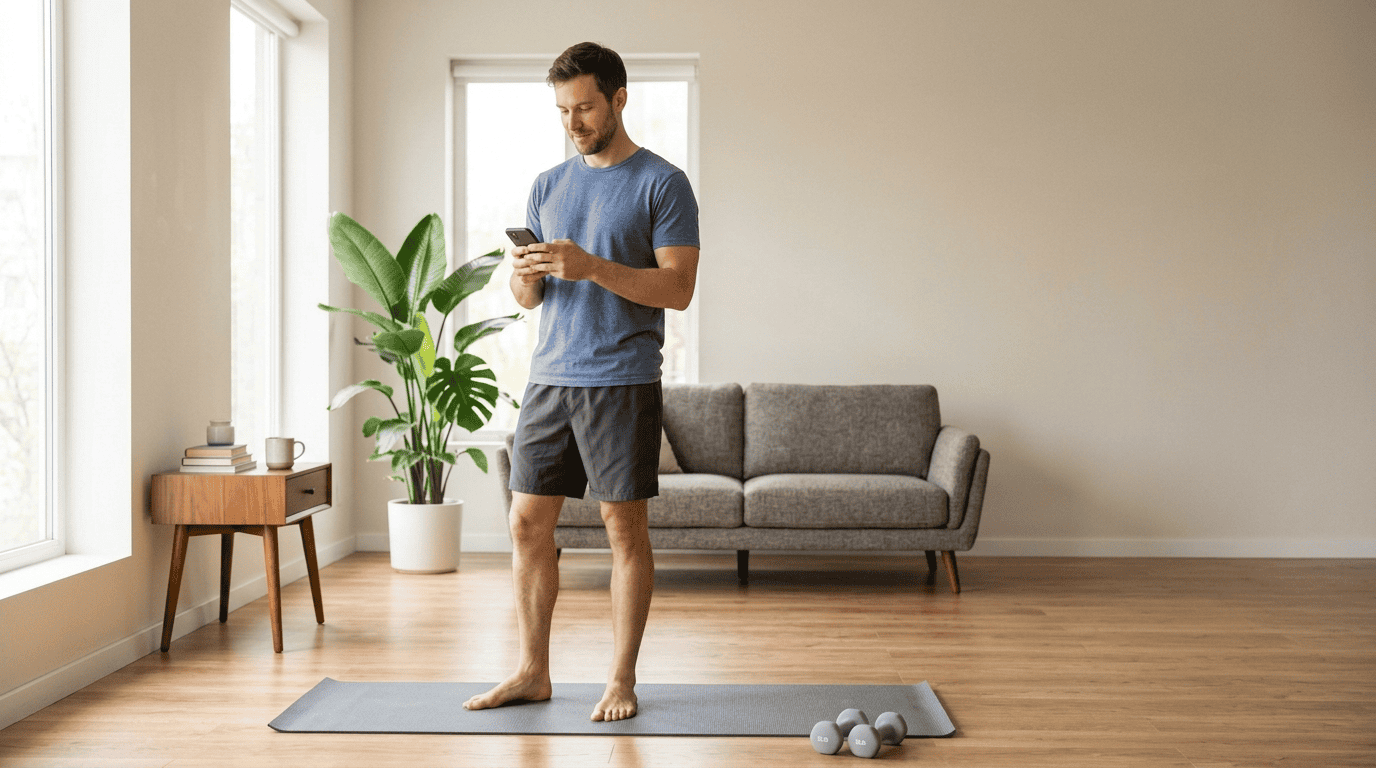
You need a patch of floor about the size of a bath towel, comfortable clothes you can move in, and a bottle of water. That’s the honest, complete list. A mat or folded towel is nice for anything on the floor, and supportive shoes help, but neither is essential. Don’t let “I need to buy stuff first” become the reason you wait, because you don’t.
Step 2: Warm up for 3 to 5 minutes
A quick warm-up wakes up your muscles and lowers your risk of tweaking something. March in place, roll your shoulders, do slow arm circles, and gently swing each leg. You want to feel a little warmer and looser, not tired. For a full follow-along routine, see our warm-up routine to do before every workout.
Step 3: Do a simple first workout
Keep your first session short and gentle. Here’s a complete beginner circuit you can do right now, with no equipment. Do each move slowly and with control, rest 30 to 60 seconds between them, and stop if anything hurts.
- Bodyweight squats, 8 to 12 reps. Sit your hips back like you’re lowering into a chair. Use a real chair to tap and stand if you need to.
- Wall or incline push-ups, 6 to 10 reps. Hands on a wall or counter; the more upright you are, the easier it is.
- Glute bridges, 10 to 12 reps. Lie on your back, feet flat, and lift your hips by squeezing your glutes.
- Standing knee lifts, 20 total, alternating. March and lift each knee toward hip height.
- Modified plank, hold 10 to 20 seconds from your hands and knees.
That’s one round, and one round is plenty on day one. Over the coming weeks you can build up to two or three rounds. For more short routines, try our 15-minute full-body workout or the full no-equipment beginner routine. For the complete picture, the home workouts for beginners guide ties it all together.
Step 4: Cool down and stretch
Spend two or three minutes stretching while your muscles are warm. Reach for your toes, open your chest, and stretch your thighs and calves. It helps you feel good afterward, and feeling good is what brings you back tomorrow.
Step 5: Repeat two or three times a week
Two or three short sessions a week, with a rest day in between, is the sweet spot for beginners. Consistency matters far more than intensity right now. A single workout you actually do beats a five-day plan you abandon by Thursday. Curious about the ideal schedule? Read how often a beginner should work out.
Your realistic first-week plan
| Day | What to do |
|---|---|
| Monday | Warm-up + 1 round of the circuit + stretch |
| Tuesday | Rest, or a gentle 10-minute walk |
| Wednesday | Warm-up + 1 round + stretch |
| Thursday | Rest |
| Friday | Warm-up + 1 round (add a few reps if it feels easy) |
| Weekend | Rest, walk, or repeat once if you feel up to it |
Listen to your body. This is general information, not medical advice. A little muscle fatigue is normal, but sharp pain, dizziness, or chest pain means stop and rest. If you have a health condition, are pregnant, or you’re unsure, check with your doctor before starting.
Common mistakes to avoid when you start
The biggest one is doing too much, too soon: five hard days in week one leads to being too sore to move in week two. Start smaller than you think you need to, focus on control over speed, and never skip your rest days. We cover the full list in beginner workout mistakes to avoid.
How to actually stick with it
Pick a rough day and time, keep the sessions short, and be kind to yourself on the days it doesn’t happen. Showing up imperfectly beats waiting to be perfect. For a deeper plan, see how to stay consistent with working out. And if you’d like a simple starting point for your numbers, try the free BMI calculator.
Prefer it on paper? Grab the free printable beginner workout plan and stick it on the fridge.
Still weighing up a membership? Read our honest home workout vs gym comparison first.
Frequently asked questions
How do I start working out at home with no experience?
Begin with a 3 to 5 minute warm-up and one round of a gentle bodyweight circuit, two or three times a week. Move slowly, use easier options when you need them, and add rounds or reps only once the current workout feels comfortable.
How long should my first workouts be?
Around 15 to 20 minutes, including your warm-up and cool-down, is a great starting point. Short and consistent beats long and occasional, and you can always add time as you get fitter.
Do I need any equipment to start?
No. Your own body weight is plenty to build strength and confidence when you’re starting out. A mat is nice for floor moves, and resistance bands are a cheap way to add variety later, but neither is required.
What if I’m very out of shape or overweight?
This routine is gentle and every exercise has an easier option, so you can scale it to wherever you are today. Go slowly, rest when you need to, and stop if anything hurts. If you have any health concerns, check with your doctor first.
How soon will I see results?
You’ll likely feel results, such as more energy and a better mood, within a week or two. Visible changes in strength and body shape usually take a couple of months of consistency, so focus on simply showing up.
Is it better to work out in the morning or evening?
The best time is whenever you’ll actually do it consistently. Morning workouts are easier to protect from a busy day, but if evenings suit your energy and schedule better, that’s completely fine.
Related articles
- Home Workouts for Beginners: The Complete Guide
- 15-Minute Full-Body Home Workout (No Equipment)
- How Often Should a Beginner Work Out?
- How to Stay Consistent With Working Out
Explore more beginner guides in Beginner Basics.
Free tools to plan your progress
Put real numbers to your goals with our free, no-sign-up beginner calculators:
- Calorie Calculator, how many calories to eat for your goal.
- TDEE Calculator, the total calories you burn each day.
- Calories Burned Calculator, calories burned by any activity.