Exercise-Induced Asthma: Symptoms, Causes and How to Exercise Safely
Exercise-induced asthma can make getting fit feel harder than it should. You start a run or a game of football full of energy, and a few minutes later you are coughing, wheezing or struggling to catch your breath in a way that feels very different from normal tiredness. For some people it is so unpleasant that they start avoiding exercise altogether.
The good news is that exercise-induced asthma is very manageable for most people. With the right diagnosis, a plan from your doctor, a smart warm-up and a few practical habits, people with asthma can and do exercise regularly, including at the very highest levels of sport. In fact, research suggests regular training is safe and improves fitness in people with stable asthma.
In this guide I will explain what exercise-induced asthma is, the symptoms, why exercise triggers it, what research says about treatment, warm-ups and training, practical tips for different types of exercise, and when to seek urgent help.
At a glance
- Exercise-induced asthma, more accurately called exercise-induced bronchoconstriction (EIB), is a narrowing of the airways triggered by exercise
- Symptoms include coughing, wheezing, chest tightness and unusual breathlessness, often during or shortly after exercise
- Breathing large amounts of cold, dry air is a major trigger
- A doctor can confirm the diagnosis and prescribe the right treatment, often an inhaler before exercise
- Research shows warm-ups that include some high-intensity efforts can reduce the airway narrowing
- A Cochrane review found physical training was well tolerated by people with asthma and improved fitness
- Seek urgent help if symptoms are severe or do not improve with your reliever inhaler
What is exercise-induced asthma?
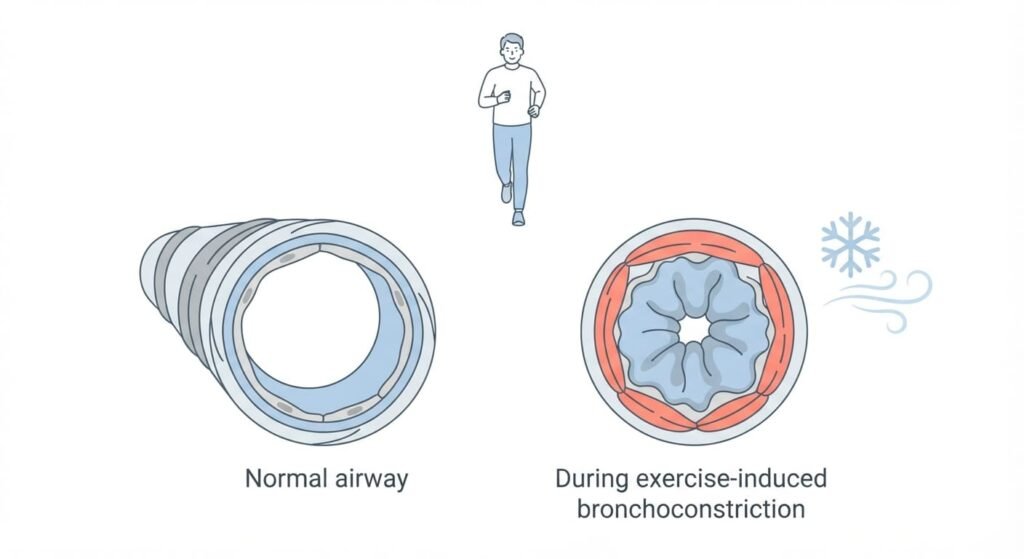
Exercise-induced asthma is when physical activity causes the airways in your lungs to narrow temporarily, making it harder to breathe. Doctors now often prefer the term exercise-induced bronchoconstriction, or EIB, because it describes what happens in the airways and because it can occur in people with and without a general asthma diagnosis.
| Term | What it means |
|---|---|
| Asthma | A long-term condition where the airways are sensitive and can become inflamed and narrow |
| Exercise-induced bronchoconstriction (EIB) | Temporary airway narrowing triggered by exercise |
| Exercise-induced asthma | The common name for EIB, especially in people who have asthma |
| Reliever inhaler | A fast-acting medicine that opens the airways |
| Preventer inhaler | A daily medicine that reduces airway inflammation over time |
Many people with ordinary asthma find exercise is one of their triggers. Others, including some athletes, only notice symptoms during exercise.
Symptoms of exercise-induced asthma
| Symptom | What it may feel like |
|---|---|
| Coughing | Often during or after exercise, sometimes the main symptom |
| Wheezing | A whistling sound when breathing out |
| Chest tightness | A squeezing or heavy feeling in the chest |
| Shortness of breath | Out of breath far more than your fitness would explain |
| Slow recovery | Taking much longer than expected to get your breath back |
| Reduced performance | Feeling unusually tired or unable to keep up |
When symptoms usually appear
Symptoms can start a few minutes into exercise, but very often they are worst shortly after you stop. For many people they then ease gradually as breathing settles, although the pattern varies from person to person.
It is not always asthma
Not every case of breathlessness during exercise is asthma. Being unfit, poor breathing technique, a throat problem called exercise-induced laryngeal obstruction, heart conditions, anaemia and anxiety can all cause similar feelings. This is why proper testing by a doctor matters before you assume it is exercise-induced asthma.
Why does exercise trigger asthma?
When you exercise, you breathe faster and often through your mouth. That means a lot of air reaches your airways without being fully warmed and moistened by your nose. The airways lose water and heat, which can trigger the release of chemicals that make the airway muscles tighten.
Common triggers that make it worse:
- Cold, dry air, such as winter running or ice rink sports
- Air pollution and traffic fumes
- Pollen and other allergens on high pollen days
- Chlorine in some indoor pools for some people
- Respiratory infections, such as colds
- Poorly controlled asthma in general
- Sudden high-intensity exercise without a warm-up
How it is diagnosed
A doctor will usually ask about your symptoms and may do breathing tests. These can include spirometry, which measures how much and how fast you can breathe out, before and after exercise or another challenge test. A significant drop in breathing out after exercise supports the diagnosis.
Testing is important because the treatment is quite different if your breathlessness turns out to have another cause.
What the research says
Treatment guidance
An official clinical practice guideline from the American Thoracic Society reviewed the evidence on treating exercise-induced bronchoconstriction. It made a strong recommendation for using a short-acting reliever inhaler before exercise in all patients with EIB. For people who still have symptoms despite this, it made strong recommendations for daily preventer treatments or other medicines taken before exercise.
Your doctor will decide which treatment suits you. Never change or start asthma medicine without medical advice.
Warm-ups that help
A meta-analysis of 7 randomised studies looked at whether a warm-up reduces exercise-induced bronchoconstriction. High-intensity interval warm-ups and variable intensity warm-ups significantly reduced the fall in lung function after exercise. Continuous low-intensity and continuous high-intensity warm-ups did not show a statistically significant benefit. The authors concluded that a warm-up including at least some high-intensity exercise may be a useful short-term, non-drug strategy.
Is regular exercise safe with asthma?
A Cochrane review of 21 studies with 772 participants looked at physical training for people with asthma. Training was well tolerated, with no adverse effects reported and no studies reporting worse asthma symptoms after training. It significantly improved fitness, measured by maximum oxygen uptake. The authors concluded that people with stable asthma should be encouraged to take part in regular exercise without fear of their symptoms getting worse.
Source: Carson and colleagues, Physical training for asthma, Cochrane Database of Systematic Reviews (2013)
That is an important message. Asthma and exercise are not enemies. With good control, exercising with asthma is safe and beneficial for most people.
A warm-up for exercise-induced asthma
Based on the research above, a warm-up with some short, harder efforts may help. Here is a simple 12 to 15 minute example. Check with your doctor that it suits you.
| Time | What to do |
|---|---|
| 0 to 5 minutes | Easy walking or jogging, gradually picking up the pace |
| 5 to 10 minutes | 6 to 8 short efforts of 20 to 30 seconds at a hard pace, with 60 seconds easy between |
| 10 to 15 minutes | Easy movement and mobility, then start your workout |
Some people notice a “refractory period” after a warm-up, a window where their airways react less to exercise. This is why a good warm-up before games or races is so useful. Our warm-up before running guide has more ideas.
Practical tips for exercising with asthma
| Tip | Why it helps |
|---|---|
| Follow your asthma action plan | Keeps your asthma well controlled overall |
| Use your inhaler as prescribed | Many people use a reliever 15 minutes before exercise on medical advice |
| Always carry your reliever inhaler | So you can treat symptoms quickly |
| Warm up with some short harder efforts | May reduce airway narrowing |
| Breathe through your nose at easy efforts | Warms and moistens the air |
| Cover your mouth and nose in cold weather | A scarf or buff warms the air |
| Avoid high pollution and high pollen times | Reduces triggers |
| Cool down gradually | Helps your breathing settle |
| Tell a training partner or coach | So they can help if needed |
| Build fitness gradually | A fitter body needs less air for the same effort |
Breathing techniques
At easy efforts, try to breathe in through your nose. During harder efforts, a relaxed, rhythmic breathing pattern helps. Our guide on how to breathe while running explains how to match breathing to your stride.
Best types of exercise for people with asthma
| Exercise | Why it can suit people with asthma | Things to watch |
|---|---|---|
| Walking | Gentle, easy to control intensity | Cold air and pollen days |
| Swimming | Warm, humid air is often easier on the airways | Some people react to chlorine |
| Cycling | Easy to vary intensity | Cold air, pollution near traffic |
| Strength training | Short efforts with rest | Breathe steadily, avoid breath holding |
| Yoga and Pilates | Focus on controlled breathing | Hot yoga may not suit everyone |
| Team sports with breaks | Natural rest periods | Warm up well first |
| Long-distance running in cold weather | Possible, with good control | Often the most challenging |
Many people find swimming particularly comfortable. See our swimming workouts for beginners if you want to try it. Walking is another great starting point, and our cardio exercises for beginners guide has gentle options.
Starting exercise if you have asthma
- Talk to your doctor or asthma nurse, and make sure your asthma is well controlled
- Ask whether you should use your reliever inhaler before exercise
- Start with gentle activities, like walking or easy cycling
- Warm up properly every time
- Build up the length and intensity of your sessions slowly over weeks
- Keep a simple diary of symptoms, weather and activity to spot patterns
Common mistakes
| Mistake | Why it is a problem | Better approach |
|---|---|---|
| Avoiding exercise completely | Fitness drops, which makes breathing harder | Exercise with a plan |
| Skipping the warm-up | Higher chance of symptoms | Warm up with some short harder efforts |
| Forgetting your inhaler | Cannot treat symptoms quickly | Keep it in your bag or pocket |
| Pushing through worsening symptoms | Can lead to a serious attack | Stop, use your reliever, rest |
| Relying only on a reliever | Underlying asthma may be poorly controlled | Review your treatment with your doctor |
| Assuming all breathlessness is asthma | Another problem may be missed | Get properly tested |
When to get urgent help
Stop exercising and use your reliever inhaler as your action plan says if you have symptoms. Call emergency services if:
- Your symptoms get worse quickly or your reliever inhaler does not help
- You are too breathless to speak in full sentences
- Your lips or fingertips look blue or grey
- You feel drowsy, confused or exhausted
- You have severe chest tightness
Do not wait to see if it settles. A severe asthma attack is a medical emergency.
Children and exercise-induced asthma
Exercise-induced asthma is common in children, and it can make them reluctant to join in with sport. With good control, children with asthma can enjoy running, team sports and swimming like everyone else. Make sure teachers and coaches know about the asthma, have a copy of the action plan and know where the inhaler is kept.
This article is general information, not medical advice. Asthma should be diagnosed and treated by a doctor or asthma nurse. See our medical disclaimer.
Exercising in cold weather
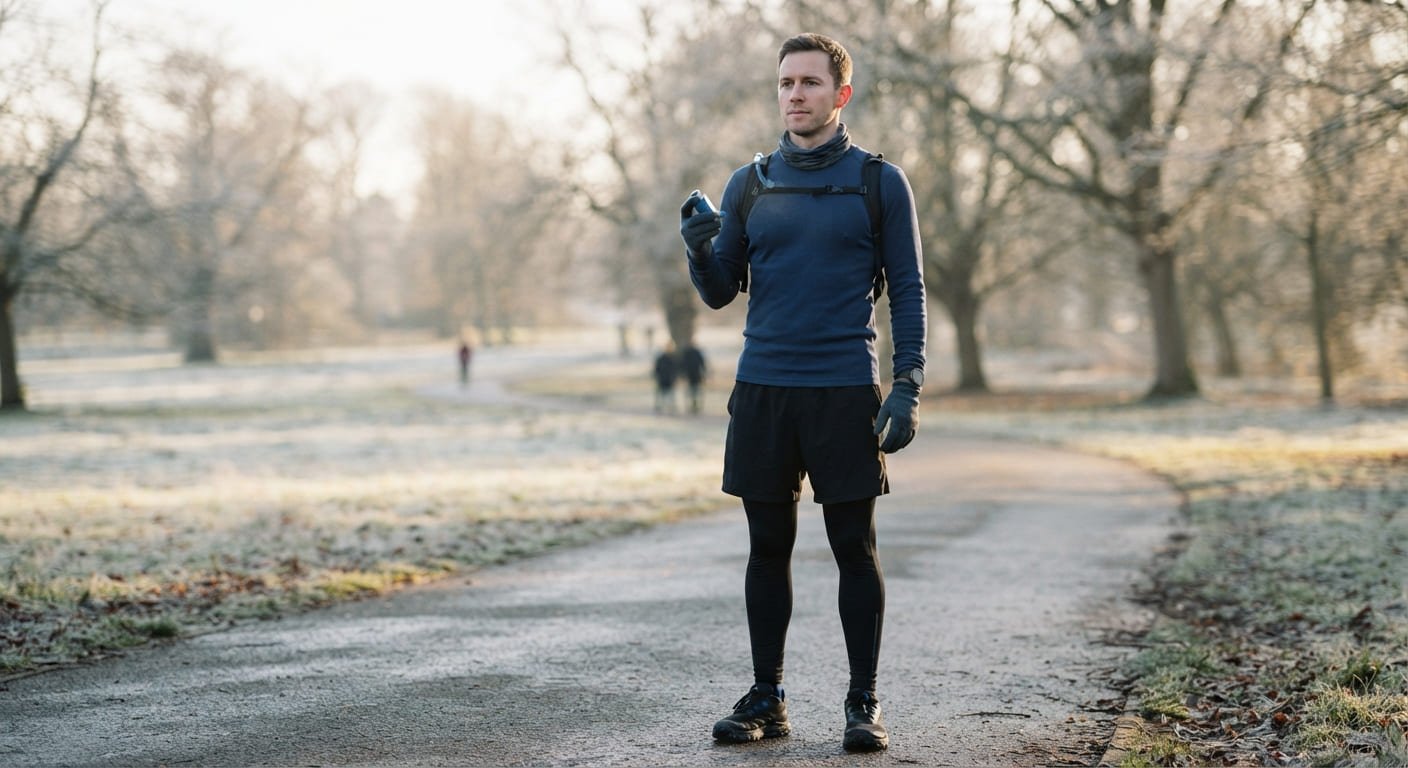
Cold, dry air is one of the biggest triggers for exercise-induced asthma, so winter needs a little extra planning.
- Wear a scarf, buff or face covering over your mouth and nose to warm the air you breathe
- Warm up indoors before heading out
- Choose shorter, steady sessions on very cold days, or move your workout indoors
- Keep your reliever inhaler in an inside pocket, as very cold inhalers may not work as well
- Breathe through your nose as much as possible at easy efforts
On the coldest, driest days, an indoor bike, a treadmill, a swimming pool or a home workout can be a sensible alternative.
Strength training with asthma
Strength training is often a comfortable form of exercising with asthma, because it uses short efforts with rest between sets. A few tips:
- Breathe steadily, exhaling as you lift and inhaling as you lower
- Avoid holding your breath for long periods during heavy lifts
- Use longer rests between sets if you feel short of breath
- Start with light weights and focus on technique
- Keep your inhaler nearby
Strength training also builds the muscles you use in every other activity, which can make everyday tasks and other forms of exercise feel easier.
Why fitness matters for asthma and exercise
When you get fitter, your body becomes more efficient. You need to breathe less air for the same effort, which means less cold, dry air passing through your airways. That is one reason regular training can make exercise feel easier over time, even though it does not cure asthma. The Cochrane review above found clear improvements in fitness with training, which supports building up gradually rather than avoiding exercise.
A 4-week starter plan
| Week | Sessions | What to do |
|---|---|---|
| 1 | 3 | 20 minutes of brisk walking or easy cycling, with a 10-minute warm-up |
| 2 | 3 | 25 minutes, including 4 short harder efforts in the warm-up |
| 3 | 3 to 4 | 30 minutes, add one short strength session |
| 4 | 3 to 4 | 30 to 40 minutes, try swimming or a gentle jog if comfortable |
Use your inhaler as advised by your doctor, and stop and rest if symptoms appear. Increase the length or intensity of sessions only when the previous week felt comfortable.
Elite athletes with asthma
Asthma and exercise-induced bronchoconstriction are surprisingly common among elite athletes, particularly in endurance and winter sports. Many top athletes manage their asthma successfully and compete at the highest level. Their success is a reminder that exercise-induced asthma does not have to limit what you can achieve, as long as it is properly diagnosed, treated and monitored. Athletes who are tested for drugs should check the current anti-doping rules for their medicines with their doctor or sports governing body.
Track your triggers
Keep a short diary for a few weeks, noting:
- The type, length and intensity of exercise
- Temperature, weather and air quality
- Pollen levels
- Whether you used your inhaler before exercise
- Any symptoms and how long they lasted
Over time, patterns will appear. You may notice that cold mornings, busy roads or high pollen days cause the most trouble, and you can plan your workouts around them. A diary is also very useful when reviewing your treatment with your doctor or asthma nurse.
Indoor exercise options on bad days
On days with very cold air, high pollen, heavy pollution or a cold, it can be sensible to move your workout indoors and keep the intensity moderate. Good options include:
- A brisk walk on a treadmill or around a shopping centre
- An exercise bike session at a steady pace
- A bodyweight strength routine at home
- Swimming in a well-ventilated pool
- Yoga, Pilates or gentle mobility work
Our indoor workouts for rainy days guide has plenty of ideas that work just as well on high-pollen or freezing days. Moving indoors on bad days means you keep your routine going without putting extra strain on your airways.
Review your asthma regularly
Asthma can change over time, with the seasons, after infections or as your fitness improves. It is a good idea to review your asthma with your doctor or asthma nurse at least once a year, and sooner if you are using your reliever inhaler more often than usual, waking at night with symptoms or finding exercise harder. Better overall asthma control often means fewer symptoms during exercise too.
Swimming and exercise-induced asthma
Many people with exercise-induced asthma find swimming one of the most comfortable forms of exercise. The air just above the water is usually warm and humid, which is kinder to sensitive airways than cold, dry air. The horizontal position and rhythmic breathing may help too. However, a small number of people react to the chemicals used in some indoor pools. If you notice symptoms only when swimming indoors, try a different pool with better ventilation, an outdoor pool, or talk to your doctor.
The bottom line
Exercise-induced asthma, or exercise-induced bronchoconstriction, is a temporary narrowing of the airways triggered by exercise, especially in cold, dry air. It causes coughing, wheezing, chest tightness and unusual breathlessness. It is very manageable for most people with a proper diagnosis, a treatment plan from your doctor, a warm-up that includes some harder efforts and sensible habits such as carrying your inhaler and avoiding major triggers.
Research shows regular physical training is safe for people with stable asthma and improves fitness. So rather than avoiding exercise, work with your doctor to get your asthma under control, start gently, warm up well and build up gradually. Exercising with asthma can and should be part of a healthy, active life.
Frequently asked questions
What is exercise-induced asthma?
Exercise-induced asthma is a temporary narrowing of the airways triggered by exercise, causing coughing, wheezing, chest tightness and breathlessness. It is also called exercise-induced bronchoconstriction.
What are the symptoms of exercise-induced asthma?
Coughing, wheezing, chest tightness, unusual shortness of breath and slow recovery, usually during exercise or shortly after you stop.
Can you exercise with asthma?
Yes. Research shows regular training is safe and improves fitness in people with stable asthma. Work with your doctor on a plan.
How do you prevent exercise-induced asthma?
Follow your treatment plan, use your inhaler as prescribed, warm up with some short harder efforts, cover your mouth in cold air and avoid high pollution or pollen.
What is the best exercise for asthma?
Swimming, walking, cycling, strength training and sports with natural breaks are often comfortable. Long runs in cold air tend to be the most challenging.
Does a warm-up help exercise-induced asthma?
Yes. A meta-analysis found that high-intensity interval or variable intensity warm-ups reduced the airway narrowing after exercise.
Can exercise-induced asthma go away?
Symptoms can improve with good asthma control and better fitness, but the tendency often remains. Most people manage it well.
Is exercise-induced asthma the same as being unfit?
No. Being unfit makes you breathless, but exercise-induced asthma involves airway narrowing, often with wheezing, coughing and chest tightness. A doctor can test for it.
When should I seek emergency help?
If your symptoms worsen quickly, your reliever does not help, you cannot speak in full sentences, or your lips look blue or grey.
What’s next?
Reading is the easy part. Pick one of these and do it today.