
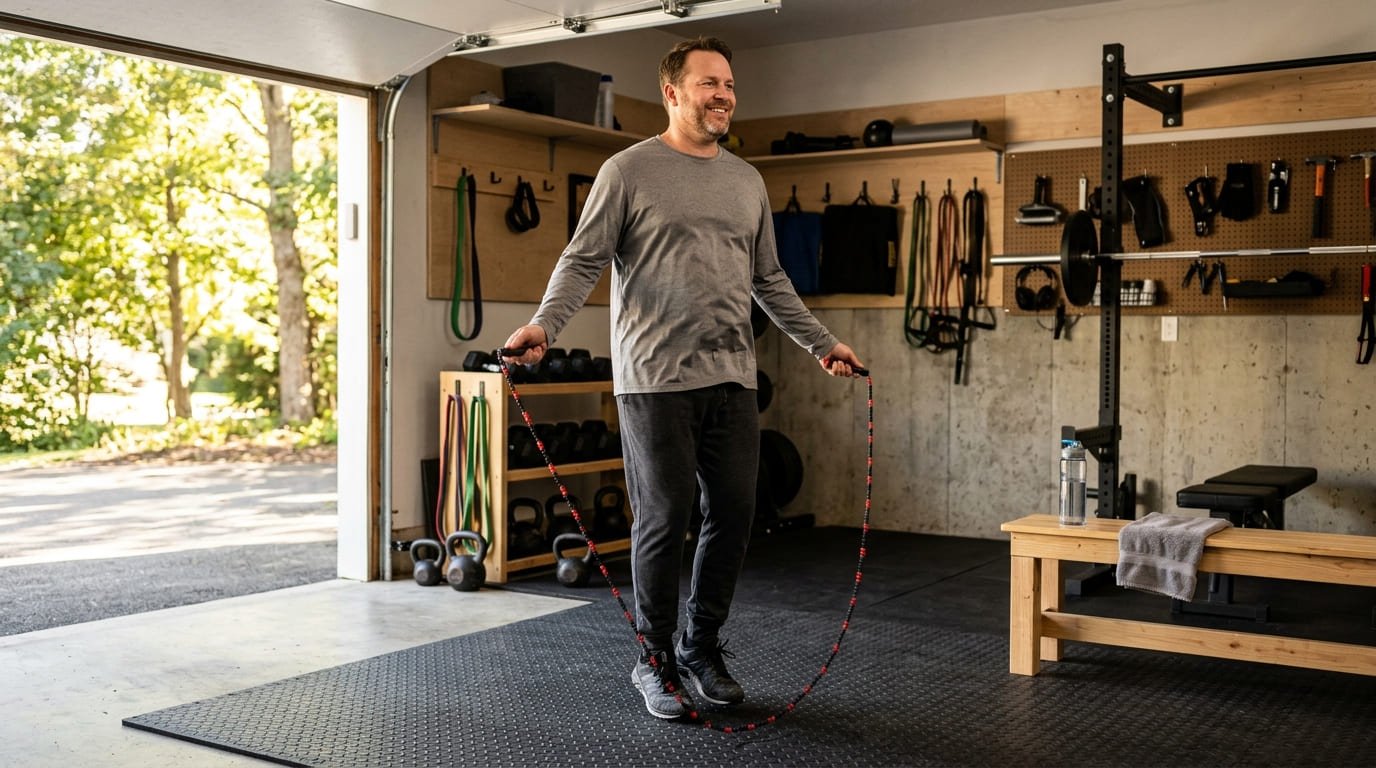
Jump Rope Weight Loss: A Realistic Plan, Calories, Results and What to Expect
Jump rope weight loss is one of those topics where the internet promises far too much. You will see claims that ten minutes of skipping burns more fat than an hour of running, or dramatic before and after photos after “just 30 days”. It is no wonder people feel disappointed when the scale barely moves after a fortnight of sore calves.
Here is the honest picture. Jumping rope is a brilliant way to burn calories in a short time, build fitness and make a home workout routine fun. It can absolutely help you lose weight. But like every form of exercise, it works best alongside sensible eating, and results come over months, not days.
This guide explains how jump rope weight loss actually works, how many calories you can expect to burn, what the research shows, realistic before and after expectations, a 12-week plan for beginners, and how to avoid the injuries that stop many people in their first month.
At a glance
- Weight loss comes from a steady calorie deficit: burning more than you eat over time
- Continuous skipping burns roughly 9 to 22 calories a minute, depending on body weight and speed
- Research in adolescents shows jump rope programmes can reduce body fat over 12 weeks
- Short-term studies in adults show big fitness gains but little change in body composition after 8 weeks
- Diet matters more than any single type of exercise for the number on the scale
- Expect around 0.5 to 1 percent of body weight per week at most, and less early on
- Build up slowly: calf and shin injuries are the biggest reason people quit
How jump rope weight loss works
Your body loses weight when it uses more energy than it takes in, consistently, over weeks and months. Exercise adds to the energy you use. Food and drink add to the energy you take in. Skipping is a way to increase the first part of that equation efficiently.
| Factor | What it does | How much control you have |
|---|---|---|
| Calories from food and drink | The biggest lever for most people | High |
| Calories burned through daily movement | Walking, chores, standing | High |
| Calories burned through exercise | Skipping, strength, cardio | Moderate |
| Your resting metabolism | Energy your body uses at rest | Low, but muscle helps a little |
So jumping rope to lose weight works best when it is one part of a plan: skip several times a week, stay active the rest of the time, and eat in a way that creates a modest calorie deficit. Our calorie calculator can estimate a sensible daily target.
How many calories does jumping rope burn?
| Body weight | Slow skipping (per 10 minutes) | Moderate skipping (per 10 minutes) | Fast skipping (per 10 minutes) |
|---|---|---|---|
| 60 kg (132 lb) | About 90 | About 125 | About 130 |
| 75 kg (165 lb) | About 115 | About 155 | About 160 |
| 90 kg (198 lb) | About 140 | About 185 | About 195 |
| 105 kg (231 lb) | About 160 | About 215 | About 225 |
These are estimates of continuous skipping, based on the MET values for rope jumping in the Compendium of Physical Activities (8.8 for slow, 11.8 for moderate and 12.3 for fast skipping). The real number depends on your speed, how much you rest and your body size. Remember that a 20-minute session with lots of rest might include only 10 minutes of actual skipping. Our detailed guide on how many calories jumping rope burns explains the method.
How skipping compares with other exercise
| Activity (about 30 minutes, 75 kg person) | Approximate calories |
|---|---|
| Brisk walking | About 150 to 180 |
| Cycling at a moderate pace | About 220 to 260 |
| Jogging | About 270 to 330 |
| Steady skipping with short breaks | About 280 to 350 |
| Swimming laps at a moderate pace | About 230 to 300 |
Skipping is high on the list, but not miles ahead of other cardio. Its real advantage is that you can get a lot of work done in a small space and a short time.
What the research says about jump rope for fat loss
A randomised trial in 40 adolescent girls with prehypertension found that a 12-week jump rope programme reduced body fat from about 33.8 percent to about 30.2 percent, and also improved abdominal fat and markers of blood vessel health compared with a control group.
A more recent randomised trial in 120 adolescents with overweight or obesity added interval jump rope exercise to school PE lessons, three times a week for 12 weeks. Both jump rope groups improved body composition and several metabolic markers, such as insulin and triglycerides, compared with a control group.
In young adults, an 8-week trial found that interval and steady rope skipping both improved cardiorespiratory fitness, but body composition did not change. That is a useful reality check: 8 weeks of exercise alone, without changes to eating, may not move the scale much, even when fitness improves a lot.
Putting it together: jump rope for fat loss can work, especially over 12 weeks or more, and especially when combined with sensible eating. Short programmes are better at improving fitness than at changing your weight.
Jump rope before and after: realistic expectations

Jump rope before and after photos online are often dramatic, and many are combined with strict diets, months of training, or even different lighting and posture. Here is a more realistic picture for a beginner skipping 3 or 4 times a week and eating a little less than before.
| Timeframe | What many people notice | What is happening |
|---|---|---|
| Weeks 1 and 2 | Sore calves, better rhythm, maybe no weight change | Your body is adapting. Water from muscle repair can hide fat loss |
| Weeks 3 and 4 | Easier sessions, better breathing, small drop in weight or waist | Fitness is improving, a small calorie deficit is adding up |
| Weeks 5 to 8 | Clothes fit better, noticeable fitness gains | Steady fat loss if eating supports it |
| Weeks 9 to 12 | Visible changes, often 3 to 6 kg lost with good eating | Consistent habits are paying off |
| 3 to 6 months | Larger changes, much better fitness | Long-term consistency |
A sensible rate of weight loss for most people is around 0.5 to 1 percent of body weight per week. Early on, the scale may even go up slightly, because sore muscles hold extra water. Our guide on why you might weigh more after working out explains why this happens and why it is temporary.
A 12-week jump rope weight loss plan for beginners
Do 3 or 4 sessions a week on non-consecutive days where possible. On other days, walk for 20 to 40 minutes. Every session starts with a 3-minute warm-up and ends with calf stretches.
| Weeks | Skipping sessions | Example session | Weekly skipping time |
|---|---|---|---|
| 1 and 2 | 3 | 20 seconds skipping, 40 seconds rest, 8 to 10 rounds | About 10 minutes |
| 3 and 4 | 3 | 30 seconds skipping, 30 seconds rest, 10 rounds | About 15 minutes |
| 5 and 6 | 3 or 4 | 45 seconds skipping, 30 seconds rest, 10 rounds | About 25 minutes |
| 7 and 8 | 4 | 60 seconds skipping, 30 seconds rest, 10 rounds | About 40 minutes |
| 9 and 10 | 4 | 2 minutes skipping, 1 minute rest, 6 to 8 rounds | About 50 to 60 minutes |
| 11 and 12 | 4 | Mix: 10 minutes steady plus 10 rounds of 30 seconds fast, 30 seconds easy | About 60 to 70 minutes |
If you cannot skip continuously yet, spend the first two weeks on our how to jump rope guide before starting this plan. For more variety, our jump rope workout guide has extra routines, and our skipping rope cardio workout guide has six interval sessions.
Add strength training
Strength training helps you keep muscle while you lose fat, which means more of the weight you lose comes from fat. Two short sessions a week are enough. Squats, lunges, push-ups, rows and planks work well, at home or in the gym. A simple approach is to finish two of your skipping sessions with 10 to 15 minutes of bodyweight strength work. Our home workout for weight loss guide has a ready-made routine.
Eating to support jump rope weight loss
You do not need a strict diet. A few consistent habits do most of the work:
| Habit | Why it helps |
|---|---|
| Protein at every meal | Keeps you full and protects muscle |
| Plenty of vegetables and fruit | Volume and fibre for few calories |
| Fewer sugary drinks | Easy calories to cut without feeling hungry |
| Watch the post-workout reward | A pastry can cancel a whole session |
| Regular meal times | Less grazing and fewer impulsive snacks |
| Enough sleep | Poor sleep increases hunger and cravings |
A 20-minute skipping session might burn 200 to 300 calories. A large latte and a muffin can easily add 600. That is not a reason to avoid treats. It is a reason to be realistic about how much exercise can “undo”. Our guide on whether cardio helps you lose weight covers this balance in more detail.
Can jump rope burn belly fat?
Jumping rope burns calories and helps you lose fat from your whole body, including your stomach. You cannot choose where the fat comes off first. Some people lose it from their face or arms first and their belly last. Consistency over months is what eventually reduces belly fat. Our guide to the best exercises for belly fat loss explains why spot reduction does not work.
Jumping rope to lose weight if you are heavier
If you have a lot of weight to lose, skipping can still be part of your plan, but the impact is higher, so start carefully:
- Begin with very short intervals, 10 to 20 seconds, and long rests
- Use low-impact options too: turn the rope while stepping side to side, or try a ropeless jump rope while marching
- Skip on a forgiving surface and wear supportive, cushioned shoes
- Combine skipping with lower impact cardio like walking, cycling or swimming
- If your knees, ankles or back hurt, focus on low-impact exercise for a few weeks and come back to skipping later
Our workouts for overweight beginners at home guide has gentle routines that build up to more impact.
How to track jump rope weight loss progress
| Measure | How often | Why |
|---|---|---|
| Weekly average weight | Weigh a few times a week, compare weekly averages | Smooths out daily swings |
| Waist measurement | Every 2 to 4 weeks | Tracks fat loss around the middle |
| Skipping fitness | Weekly | Longer intervals, fewer trips, faster recovery |
| Photos | Monthly | Shows changes the scale hides |
| How clothes fit | Ongoing | Simple and practical |
Our guide on how to measure your waist and hips shows how to measure consistently.
Avoiding the injuries that stop progress
The most common reason people give up jump rope weight loss plans is not boredom. It is sore calves, shin pain or Achilles trouble from doing too much too soon.
- Increase your weekly skipping time gradually, as in the plan above
- Keep jumps small, about 2 to 3 cm
- Land softly on the balls of your feet
- Use a mat or wooden floor rather than concrete. See our guide to the jump rope mat and shoes
- Stretch your calves after every session. Our calf stretches guide has a short routine
- Rest if you feel sharp pain along the shin or in the Achilles. Our shin splints stretches guide explains what to do
This article is general information, not medical advice. Check with a doctor before starting if you have heart, joint or balance problems, or a lot of weight to lose. See our medical disclaimer.
Common mistakes
| Mistake | What happens | Fix |
|---|---|---|
| Skipping every day from day one | Sore calves, shin pain, burnout | Start with 3 sessions a week |
| Expecting fast results | Disappointment and quitting | Judge progress over 8 to 12 weeks |
| Eating back the calories | No weight change | Plan meals, keep treats in proportion |
| Only skipping, no strength work | More muscle loss | Add 2 short strength sessions |
| Relying on the scale alone | Misleading daily swings | Track waist, fitness and photos too |
| Jumping too high | Faster fatigue, harder landings | Small, quick jumps |
A sample jump rope weight loss day
| Time | What you do |
|---|---|
| Morning | Breakfast with protein, such as eggs or Greek yoghurt with fruit |
| Lunchtime | 10-minute walk after lunch |
| Late afternoon | Skipping session, 15 to 20 minutes including warm-up and rests |
| Evening meal | Lean protein, plenty of vegetables, a sensible portion of rice, potatoes or bread |
| Evening | Calf stretches and an early night |
Nothing here is extreme, and that is the point. Jump rope weight loss works best with small habits you can repeat every week, not a punishing routine you abandon after ten days.
What to do when weight loss stalls
| Possible cause | What to try |
|---|---|
| Eating has crept up | Track food honestly for one week |
| Skipping sessions feel easy | Progress intervals or add a fourth session |
| Less daily movement outside workouts | Add a daily walk |
| Water retention from new training | Wait 2 weeks and look at the trend |
| Poor sleep or high stress | Prioritise sleep, try a short wind-down routine |
Plateaus are normal. Most people who keep going through one or two plateaus reach their goals. Most people who quit during a plateau do not.
Why fitness gains matter too
Even when the scale is slow, jumping rope to lose weight brings benefits you can feel quickly: better breathing, more energy, stronger calves and ankles, and often better mood. Research on rope skipping shows clear fitness gains within 8 weeks. Treat those gains as wins in their own right. They make every session easier and keep you motivated while the slower changes in body weight catch up.
Combining skipping with other exercise
| Week plan | Skipping | Other exercise |
|---|---|---|
| Option 1 | 3 sessions of 15 to 20 minutes | 2 strength sessions, daily walks |
| Option 2 | 2 interval sessions | 2 strength sessions, 1 longer walk or bike ride |
| Option 3 | 4 short sessions of 10 minutes | Daily walks, 1 strength session |
Choose the option that fits your life. The best jump rope weight loss plan is the one you can stick to for months.
Questions to ask yourself each month
- Am I skipping at least three times most weeks?
- Is my waist measurement moving down, even slowly?
- Are my sessions getting longer or easier?
- Am I eating mostly the way I planned?
- Am I sleeping reasonably well?
If the answer to most of these is yes, your jump rope weight loss plan is on track, even if the scale has not moved much this month. Keep going, and review again in four weeks. Small, honest check-ins like this keep you focused on the habits that drive results, rather than on day-to-day changes you cannot control.
Skipping outdoors and on holiday
A rope weighs almost nothing and fits in any bag, so it travels well. On holiday or a busy work trip, a 10-minute skipping session in a hotel room, a garden or a quiet car park keeps your routine going. Choose a smooth surface, check for space overhead, and keep sessions short if the ground is hard. Missing a week is not a disaster, but a few short sessions make it much easier to get back into your routine when you return home.
The bottom line
Jump rope weight loss is real, but it is not magic, and anyone promising overnight results is selling something. Skipping burns a lot of calories in a short time, improves fitness quickly and fits into small spaces and busy days. Research in adolescents shows meaningful fat loss over 12 weeks, while short adult studies show big fitness gains with little weight change on their own.
The formula that works is simple: skip three or four times a week, build up gradually, add two short strength sessions, walk on other days, and eat a little less than before. Give it at least 12 weeks, track more than just the scale, and look after your calves. Your own before and after story will be built on consistency, not on any single workout.
Frequently asked questions
Can you lose weight by jumping rope?
Yes. Jumping rope burns a lot of calories and can help you lose weight when combined with a modest calorie deficit from eating. Results build over weeks and months.
How long should I jump rope to lose weight?
Build up to about 15 to 30 minutes of total skipping, 3 or 4 times a week, including rests. Beginners should start with about 10 minutes and add a little each week.
How much weight can I lose jumping rope for 30 days?
It varies a lot. With sensible eating, many people lose around 1 to 3 kg in a month, but early water retention can hide fat loss. Focus on habits and trends over several weeks.
Is jumping rope better than running for weight loss?
Both burn similar calories at similar effort levels. Skipping is quicker and fits into small spaces, while running is easier to keep up for longer sessions. Choose the one you will do consistently.
Does jump rope burn belly fat?
It helps you lose fat from your whole body, including your belly, but you cannot target belly fat specifically. Consistency and a calorie deficit are what reduce it over time.
How many calories does 10 minutes of jumping rope burn?
Roughly 100 to 200 calories, depending on your body weight and how fast you skip. Heavier people and faster skipping burn more.
Is jump rope good for weight loss for beginners?
Yes, if you start slowly. Short intervals with plenty of rest, three times a week, are a safe start. Add walking and strength training for the best results.
Why am I not losing weight jumping rope?
Common reasons are eating more than you realise, overestimating calories burned, water retention from new exercise, or not enough time yet. Track food for a week and judge progress over at least a month.
What do jump rope before and after results really look like?
Most realistic results show steady changes over 3 to 6 months: better fitness, a smaller waist and gradual weight loss. Dramatic 30-day transformations are usually exaggerated or include strict dieting.
What’s next?
Reading is the easy part. Pick one of these and do it today.