How Long Should You Wait After Exercising to Eat? A Simple, Science-Based Guide
How long should you wait after exercising to eat? It is one of the most common questions I see from beginners, and the answers online are all over the place. Some people say you must eat within 30 minutes or your workout is wasted. Others say you should wait an hour so you burn more fat. Some people feel starving the moment they finish, while others cannot face food for an hour.
The good news is that the real answer is more relaxed than most fitness myths suggest. For most people, there is no strict waiting period at all. You can eat as soon as you feel ready, and you have a fairly wide window to get a good meal in. What matters more is what you eat across the day, how hard and long you trained, and how your stomach feels.
This guide explains how long you should wait after exercising to eat, what research says about appetite, digestion and the so-called anabolic window, when timing matters more, and what to eat after different types of exercise, with simple meal ideas you can use straight away.
At a glance
- There is no fixed rule: most people can eat as soon as they feel ready after exercise
- A good target is a meal or snack within about 1 to 2 hours after a workout
- Research suggests the post-workout “anabolic window” is wider than the old 30-minute myth
- Hard, long sessions slow digestion, so a light snack first may sit better
- Exercise often reduces appetite for a short time, but it does not usually make people eat much more afterwards
- Include protein and carbohydrates in your post-workout meal
- Timing matters more if you train twice a day, train fasted or have another session soon
The short answer

So, how long should you wait after exercising to eat? For most beginners, the honest answer is: you do not need to wait at all. If you feel hungry and comfortable, eat. If your stomach feels unsettled, give it 15 to 30 minutes, sip some water, and then have something light.
| Situation | When to eat |
|---|---|
| Easy walk or light session | Whenever you are hungry, no waiting needed |
| Moderate workout (30 to 60 minutes) | Within about 1 to 2 hours |
| Hard or long session (over 60 to 90 minutes) | A small snack soon after, then a full meal within 2 hours |
| Trained fasted in the morning | Sooner rather than later, ideally within an hour |
| Training again within 8 hours | Soon after, with carbs and protein |
| Feeling sick or bloated | Wait until it settles, sip fluids, then eat something light |
There is no benefit to forcing yourself to wait if you are hungry, and no need to force food down if you feel queasy. Listen to your body and plan a proper meal within a couple of hours.
Why people think you must wait (or rush)
Two old ideas pull people in opposite directions:
- “Eat within 30 minutes or lose your gains.” This came from the idea of a narrow “anabolic window” after training, when muscles were thought to absorb nutrients far better
- “Wait an hour so you keep burning fat.” This idea suggests that delaying food extends fat burning after exercise
Neither idea holds up well for everyday exercisers. The body does not switch off muscle repair after 30 minutes, and delaying a meal by an hour makes little difference to overall fat loss. Fat loss depends on your energy balance over days and weeks, not the exact timing of one meal.
How long should you wait after exercising to eat? What the anabolic window research says
A widely cited review on nutrient timing looked at the evidence behind the post-exercise “anabolic window”. The authors concluded that the window for eating protein around exercise is likely much wider than the 30 to 60 minutes often claimed, and that the timing depends on when you last ate before training. If you had a meal containing protein within a few hours before your workout, the urgency to eat straight afterwards is much lower.
The practical takeaway:
- If you ate a meal 1 to 3 hours before training, eating within 1 to 2 hours afterwards is plenty
- If you trained fasted, for example first thing in the morning, eating sooner after training makes more sense
- Your total daily protein matters far more than the exact minute you eat it
Our protein intake calculator can help you find a sensible daily target.
Why you might not feel hungry after exercise
Many people notice they do not feel hungry straight after a hard workout. This is normal. Intense exercise can temporarily reduce appetite, partly because blood flow is directed to working muscles and partly because of changes in appetite hormones.
A meta-analysis of 29 studies (51 trials) looked at how a single bout of exercise affects how much people eat afterwards. Exercise had only a trivial effect on the amount of food eaten later, while it created a short-term energy deficit because of the calories burned. In other words, most people do not compensate by eating much more straight after exercise.
That is reassuring if you worry that exercise will make you overeat. It also means that if you do not feel hungry right away, it is fine to wait until your appetite returns, as long as you eat a proper meal later.
How exercise affects digestion
Exercise can change how quickly your stomach empties. A meta-analysis of 20 studies (35 trials) found that the overall effect of exercise on stomach emptying was small, but the details mattered. Lower intensity exercise tended to speed up emptying, while high intensity exercise tended to slow it. Walking was linked to faster emptying than cycling, and larger meals or drinks and longer exercise sessions were linked to slower emptying.
This explains why a big meal straight after a very hard session can feel heavy or uncomfortable. If that happens to you:
- Start with a small, easy-to-digest snack or a drink like milk or a smoothie
- Have a full meal 30 to 90 minutes later
- Avoid very fatty or high-fibre foods immediately after very hard training
So if you are asking how long should you wait after exercising to eat after a really hard session, the honest answer is: long enough for your stomach to settle, which for many people is 15 to 45 minutes. If you often feel bloated or uncomfortable after workouts, our guides to feeling bloated after a workout and stomach pain after a workout may help.
When to eat after different types of exercise
The answer to how long should you wait after exercising to eat changes a little depending on what kind of training you did. Here is a simple breakdown.
After walking or light activity
Eat whenever you like. A walk does not create any special nutrition needs. In fact, walking after a meal is good for blood sugar, so the order can be either way. Our guide to walking after eating explains more.
After strength training
Aim for a meal or snack with protein within about 1 to 2 hours, especially if you trained fasted. Around 20 to 40 grams of protein is a sensible amount for most adults, along with some carbohydrates.
After cardio or running
For sessions under an hour at easy to moderate effort, eat at your next normal meal or within a couple of hours. After longer runs or rides, prioritise fluids, carbohydrates and some protein sooner, especially if you train again the next day.
After HIIT or very hard sessions
Your stomach may need a little time. Sip water first, then have a light snack within 30 to 60 minutes and a full meal later.
After fasted morning workouts
If you train before breakfast, it is sensible to eat within about an hour. Your body has gone a long time without food, so there is less of a nutrient buffer from a previous meal.
After evening workouts
Eat a normal dinner. If you finish late, a lighter meal that includes protein, such as eggs, yoghurt or fish with vegetables, can be easier on sleep than a heavy meal.
What to eat after exercise
| Nutrient | Why it helps | Good sources |
|---|---|---|
| Protein | Repairs and builds muscle | Eggs, chicken, fish, Greek yoghurt, lentils, tofu, milk |
| Carbohydrates | Refills energy stores | Rice, potatoes, oats, fruit, bread, pasta |
| Fluids | Replace sweat losses | Water, milk, an electrolyte drink after long sweaty sessions |
| Vegetables and fruit | Vitamins, minerals and fibre | Any you enjoy |
For a fuller list of meal and snack ideas, see our guide on what to eat after a workout.
Easy post-workout meals and snacks
| Option | Why it works |
|---|---|
| Greek yoghurt with fruit and oats | Protein and carbs, easy to digest |
| Eggs on wholegrain toast | Quick, filling, good protein |
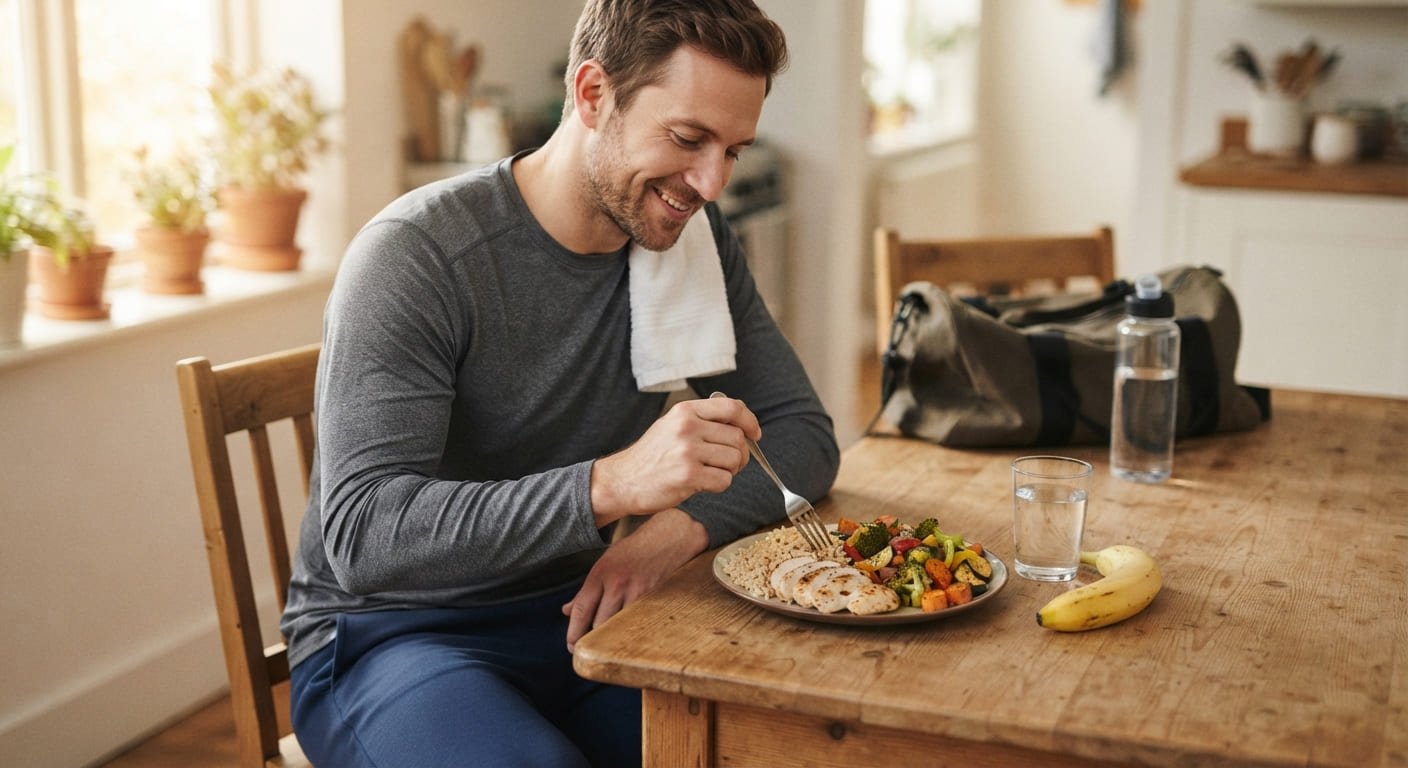
| Chicken, rice and vegetables | Balanced, classic recovery meal |
| Glass of milk and a banana | Quick, portable, good if you are not very hungry |
| Lentil or bean curry with rice | Plant protein and carbs |
| Tuna sandwich | Simple, high protein |
| Smoothie with milk, fruit and oats | Easy if solid food feels heavy |
| Protein shake with a piece of fruit | Convenient on busy days |
If you use protein shakes, our guide on whether to have a protein shake before or after a workout explains the timing in more detail.
What about eating before exercise?
People who search for how long to wait to eat after working out often have the opposite question too: how long to wait after eating before they train.
How long you wait after eating before training also matters. As a rough guide:
| Meal size | Wait before exercise |
|---|---|
| Large meal | 2 to 3 hours |
| Normal meal | 1 to 2 hours |
| Small snack | 30 to 60 minutes |
| Light snack like a banana | 15 to 30 minutes |
What you eat before training affects how urgent it is to eat afterwards. Our guide on what to eat before a workout covers the pre-exercise side.
Does waiting to eat help weight loss?
Some people wonder how long should you wait after exercising to eat if the goal is weight loss. Many delay eating after exercise because they hope it will burn more fat. In reality, the effect is very small. Weight loss comes down to your overall eating pattern and activity across days and weeks. Delaying a meal might help if it naturally leads you to eat less overall, but it can backfire if you end up so hungry that you overeat later.
For most beginners, the best approach is simple: eat a sensible, balanced meal within a couple of hours, include protein, and do not use food as a reward for exercise.
Common mistakes
| Mistake | Why it is a problem | Better approach |
|---|---|---|
| Forcing food down when you feel sick | Can cause nausea or discomfort | Wait a little, sip fluids, start light |
| Skipping food for hours after hard training | Slower recovery, more hunger later | Eat within about 2 hours |
| Rewarding yourself with treats | Can undo the calorie deficit | Plan a balanced meal instead |
| Only eating protein | Misses carbs for energy | Combine protein and carbs |
| Forgetting fluids | Dehydration, tiredness | Drink water, more after sweaty sessions |
| Stressing about a 30-minute window | Unnecessary pressure | Focus on daily totals |
When timing matters more
For a few groups, the question of how long should you wait after exercising to eat deserves more attention. Timing becomes more important if:
- You train twice in one day or have a competition soon
- You did a very long endurance session
- You trained fasted
- You have diabetes or take medication that affects blood sugar. Talk to your doctor or dietitian about the right timing for you
Do not forget to drink
When people ask how long they should wait after exercising to eat, they often forget that drinking matters just as much as eating. You lose fluid through sweat, and on hot days or after long sessions that loss can be significant.
- Start sipping water as soon as you finish, even if you are not hungry yet
- A useful check is the colour of your urine: pale straw is a good sign, dark yellow means drink more
- After long, very sweaty sessions, a drink or meal with a little salt helps you hold on to the fluid
- Milk is a handy option, because it gives you fluid, protein and carbohydrate in one glass
If you feel unwell after exercise, dehydration is often part of the picture, so fluids come first and food follows.
Signs you waited too long to eat
Waiting a little after exercise is fine, but waiting many hours can catch up with you. Common signs include:
| Sign | What it suggests |
|---|---|
| Feeling shaky, dizzy or irritable | Your blood sugar may be dropping |
| Very strong cravings later in the day | You are making up for the gap |
| Poor sleep after evening training | Going to bed too hungry |
| Feeling flat in your next workout | Energy stores not refilled |
| Unusual muscle soreness that lingers | Recovery may need more support |
If you notice these regularly, move your post-workout meal a little earlier, or plan a small snack straight after training and a full meal later.
A sample day of eating around training
Here is how eating after exercise might look on a normal day for someone who trains after work. It is an example, not a strict plan.
| Time | What happens |
|---|---|
| 7:30 | Breakfast: porridge with milk, fruit and a spoon of nut butter |
| 12:30 | Lunch: chicken or bean wrap with salad and a piece of fruit |
| 15:30 | Snack: yoghurt or a banana |
| 17:30 | Workout (45 to 60 minutes) |
| 18:45 | Dinner: salmon or lentils with rice and vegetables, plus a glass of water |
| 21:00 | Optional: a small bowl of yoghurt or a glass of milk if hungry |
In this example, the meal comes about an hour after training. Nothing is rushed, and the day as a whole provides plenty of protein, carbohydrates and vegetables. For a morning trainer, the same idea simply shifts: a light snack or nothing before, then breakfast soon after.
What this means for beginners
If you are new to exercise, the main goal is to build a habit you can keep. Worrying about precise timing can make exercise feel more complicated than it needs to be. A sensible beginner approach looks like this:
- Eat normal, balanced meals at regular times
- Train when it suits your day, ideally not straight after a very large meal
- After training, drink water and eat your next meal or a snack within a couple of hours
- If you feel hungry right after exercise, eat; if you do not, wait until you do
That is all most people need. As your training gets longer or harder, you can fine-tune when to eat after a workout, but the basics stay the same.
Quick myths about eating after exercise
| Myth | What is more accurate |
|---|---|
| You must eat within 30 minutes | The window is wider, especially if you ate before training |
| Eating after exercise cancels the workout | A sensible meal supports recovery and does not undo your effort |
| Waiting longer burns much more fat | Any extra effect is small compared with your overall diet |
| You should never eat late after evening training | A light, balanced meal is fine and can help sleep |
| Protein shakes are essential | Normal food works just as well; shakes are simply convenient |
Clearing up these myths takes a lot of stress out of the question of when to eat after a workout. You do not need a stopwatch or special products, just a sensible plan.
Eating after exercise as you get older
As we age, muscles can become a little less responsive to protein, and appetite may drop. For older adults, it makes sense not to skip a meal after training and to include a good source of protein, such as eggs, fish, yoghurt, milk or beans, at most meals. Spreading protein through the day is generally more helpful than having most of it in one big meal. If you have a medical condition or take regular medication, check with your doctor or a dietitian before making big changes.
A quick guide you can save
So, how long should you wait after exercising to eat? Here is the whole article in four lines:
- Light activity: eat whenever you are hungry
- Normal workouts: eat within about 1 to 2 hours
- Hard, long or fasted sessions: eat sooner, starting with something light if needed
- Every day: focus on balanced meals with protein, carbs, fruit, vegetables and fluids
If you only remember one thing about how long should you wait after exercising to eat, or about eating after exercise in general, make it this: consistency across the day beats perfect timing after one session.
The bottom line
How long should you wait after exercising to eat? For most people, you do not need to wait at all. Eat when you feel ready, and aim for a meal or snack with protein and carbohydrates within about 1 to 2 hours after your workout. Research suggests the anabolic window is wider than the old 30-minute rule, and exercise usually does not make people eat much more afterwards.
If your stomach feels unsettled after hard exercise, wait a little, sip some water and start with something light. If you trained fasted or plan to train again soon, eat sooner. Above all, focus on balanced meals across the whole day, because that matters far more for your health, recovery and results than the exact minute you eat.
Frequently asked questions
How long should you wait after exercising to eat?
Most people do not need to wait at all. Eat when you feel ready, ideally within about 1 to 2 hours after your workout.
How long should you wait after exercising to eat if you feel sick?
Give your stomach 15 to 45 minutes, sip water, then start with something light like a banana, yoghurt or a glass of milk.
Is it bad to eat right after a workout?
No. Eating soon after exercise is fine and can help recovery. If your stomach feels unsettled, start with something light.
Do I need to eat within 30 minutes after a workout?
No. Research suggests the post-exercise window is wider than 30 minutes, especially if you ate a meal a few hours before training.
Does waiting to eat after exercise burn more fat?
The effect is very small. Overall eating habits and activity matter much more for fat loss than the timing of one meal.
Why am I not hungry after a workout?
Hard exercise can temporarily reduce appetite. It is fine to wait until your appetite returns, as long as you eat a proper meal later.
What should I eat after a workout?
A meal or snack with protein and carbohydrates, such as eggs on toast, Greek yoghurt with fruit, or chicken with rice and vegetables.
How long should I wait to eat after a morning fasted workout?
It is sensible to eat within about an hour, because your body has gone a long time without food.
Can I eat a big meal straight after exercise?
You can, but after very hard sessions a big meal may feel heavy. A small snack first and a full meal later often sits better.
How long to wait to eat after walking?
There is no need to wait. Walking does not create special nutrition needs, so eat whenever you are hungry.
What’s next?
Reading is the easy part. Pick one of these and do it today.