What to Eat After a Workout: Easy Post-Workout Meals and Snacks
After a workout, the best thing to eat is a normal meal or snack with a good source of protein, some carbohydrate and plenty of fluid, ideally within a couple of hours. Think eggs on toast, chicken with rice, Greek yogurt with fruit, or a tuna sandwich. You don’t need special foods, you don’t need to eat in a 30-minute panic, and you definitely don’t need to “reward” yourself with a takeaway.
For my first few months of training, I’d either eat nothing afterwards because I thought it would undo the calories I’d just burned, or eat enough for three people because I felt I’d earned it. Neither worked. What finally stuck was treating the meal after a workout like any other decent meal, just with a bit more attention on protein.
This guide covers how soon you should eat, what a good post-workout meal looks like, 20 easy options, how to adjust for your goals, and a few myths worth ignoring.
At a glance
- When: within about 1 to 2 hours for most people
- Sooner if: you trained on an empty stomach or trained very hard
- Protein: around 20 to 40 g
- Carbohydrates: a normal portion, more after long or intense sessions
- Fluids: drink water to replace what you sweated out
- Easy go-tos: eggs on toast, Greek yogurt with fruit, chicken and rice
- Skip: the “I earned it” junk food habit
How soon should you eat after a workout?
You don’t need to eat the moment you finish. For most people, eating within one to two hours is perfectly fine, and a lot of the time your next normal meal falls in that window anyway.
The timing matters a little more in a few situations:
| Situation | How soon to eat | Why |
|---|---|---|
| You trained after a meal a few hours earlier | Within 2 hours, or at your next meal | Nutrients from that earlier meal are still around |
| You trained first thing without eating | Within about an hour | It’s been a long time since you last ate |
| Very hard or long session (over 90 minutes) | Within an hour | Helps start refilling energy stores |
| Training again later the same day | As soon as practical | Faster recovery before the next session |
| Short or easy session | At your next normal meal | No need for anything special |
If you’re not hungry straight after training, that’s common and nothing to worry about. A glass of milk, a yogurt or a piece of fruit can tide you over until you feel like eating properly.
What a good post-workout meal includes
A good post-workout meal doesn’t need to be complicated. It needs a few things:
- Protein. Around 20 to 40 g helps your muscles repair and adapt. Meat, fish, eggs, dairy, beans, lentils and tofu all count.
- Carbohydrate. Refills the energy your muscles used. Rice, potatoes, bread, oats, pasta and fruit are all good choices.
- Colour. Vegetables or fruit give you fibre, vitamins and minerals. Unlike before a workout, fibre isn’t a problem afterwards.
- Fluid. Water is enough for most workouts.
- Some fat is fine. Unlike before training, there’s no need to keep fat low after a workout.
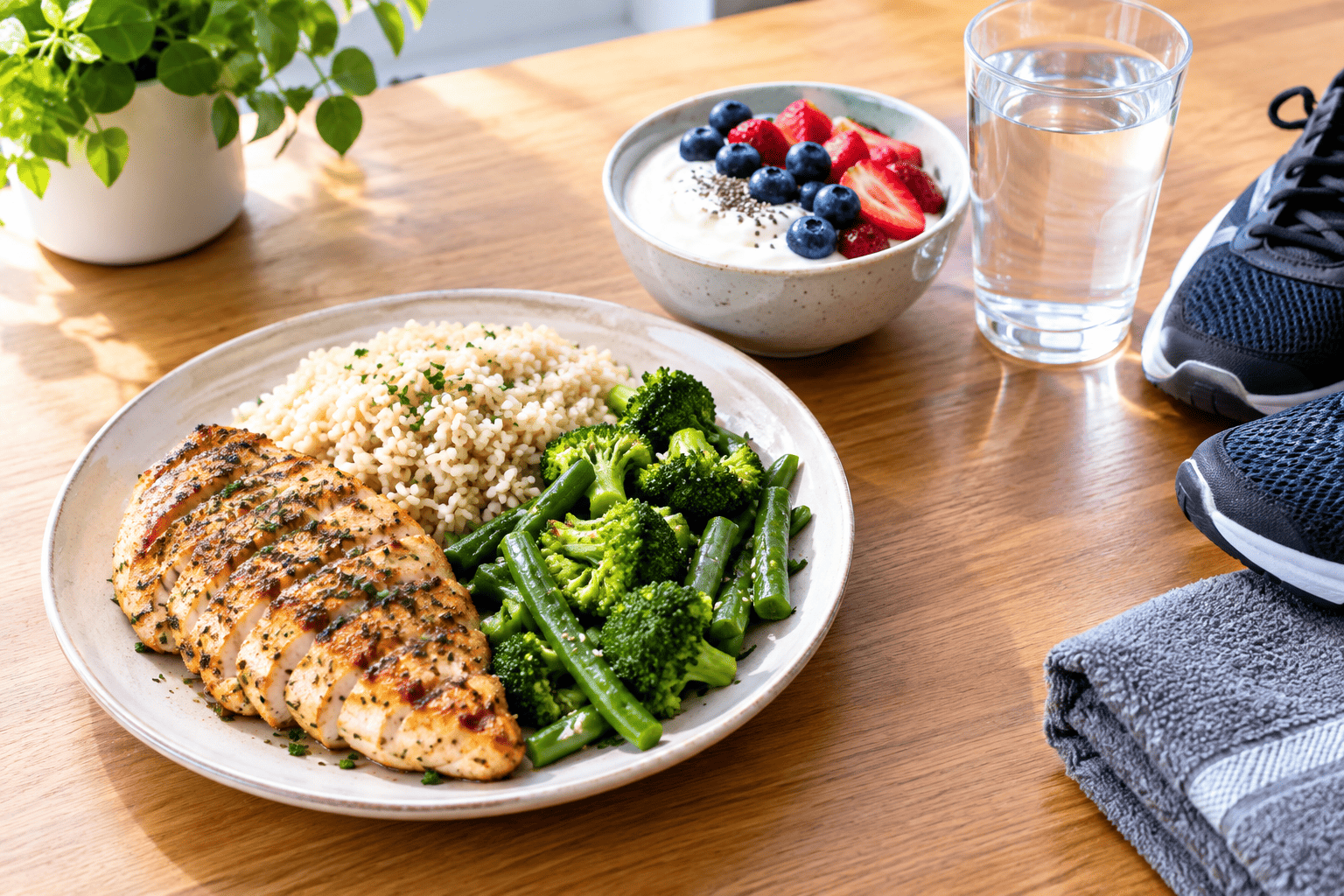
A simple way to build the plate: a palm-sized portion of protein, a fist-sized portion of carbohydrate, and half the plate vegetables. Adjust the portions up or down based on your goals and how hard you trained.
How much protein after a workout?
Around 20 to 40 g of protein in the meal after training is a good target for most adults. A useful rough guide is about 0.25 to 0.4 g per kg of body weight.
More importantly, your total daily protein matters far more than this one meal. Most people who exercise regularly do well with about 1.2 to 2 g of protein per kg of body weight a day, spread across their meals.
If you want a personal number, my protein intake calculator works it out for you. And if you’re wondering whether to use a shake instead, my guide on protein shakes before or after a workout explains when a shake makes sense.
Do you need carbs after a workout?
For most beginners doing workouts under an hour, a normal portion of carbohydrate with your meal is plenty. You don’t need to load up.
Carbs become more important after:
- Long workouts, over about 90 minutes
- Very hard interval or endurance sessions
- Training twice in one day
- Training on consecutive days for sport
Endurance athletes sometimes eat around 1 g of carbohydrate per kg of body weight soon after a long session to refill their energy stores quickly. That’s rarely necessary for someone doing a 30 to 45 minute home workout a few times a week.
20 easy post-workout meals and snacks
The protein values below are approximate, and portion sizes make a big difference, so treat them as a rough guide.
| Meal or snack | Approx. protein | Good for |
|---|---|---|
| Two or three eggs on wholemeal toast | 15 to 20 g | Breakfast after a morning workout |
| Greek yogurt (200 g) with berries and granola | 20 g | Quick snack or breakfast |
| Chicken breast with rice and vegetables | 35 to 40 g | Dinner after an evening workout |
| Tuna sandwich on wholemeal bread | 25 to 30 g | Lunch |
| Salmon with potatoes and greens | 25 to 30 g | Dinner |
| Cottage cheese (200 g) with pineapple | 22 g | Light snack |
| Porridge made with milk and a spoon of peanut butter | 15 to 18 g | Breakfast |
| Omelette with vegetables and cheese | 20 to 25 g | Any time |
| Lentil and vegetable soup with bread | 15 to 18 g | Vegetarian lunch |
| Tofu stir-fry with noodles | 18 to 22 g | Vegan dinner |
| Turkey or chicken wrap with salad | 25 g | Lunch on the go |
| Bean chilli with rice | 15 to 20 g | Vegetarian dinner |
| Glass of milk and a banana | 9 to 10 g | Small snack when not hungry |
| Protein shake with a piece of fruit | 20 to 25 g | Quick option on busy days |
| Scrambled eggs with smoked salmon | 25 to 30 g | Higher-protein breakfast |
| Hummus, falafel and wholemeal pitta | 12 to 15 g | Vegetarian lunch |
| Baked potato with tuna or beans | 20 to 25 g | Simple dinner |
| Edamame beans with rice | 15 to 18 g | Vegan option |
| Chicken pasta with tomato sauce | 30 to 35 g | Dinner after a longer session |
| Overnight oats with yogurt and seeds | 15 to 20 g | Breakfast prepared the night before |
My own default after an evening workout is embarrassingly simple: chicken or eggs, rice or potatoes, and whatever vegetables are in the fridge. It’s not exciting, but it’s easy enough that I never skip it.
Post-workout breakfast ideas
If you train in the morning, your post-workout meal is usually breakfast, which is convenient. Some good options:
- Eggs on toast with spinach or tomatoes
- Greek yogurt with berries, oats and a drizzle of honey
- Porridge made with milk, topped with banana and nut butter
- An omelette with vegetables and a slice of wholemeal toast
- Overnight oats prepared the night before, ready when you walk in the door
- A smoothie with milk, yogurt, fruit and oats if you’re short on time
If you trained on an empty stomach, try to eat reasonably soon, within about an hour. It’s been a long time since your last meal, so this is when breakfast matters most.
Adjusting for your goals
If you want to build muscle
- Aim for 20 to 40 g of protein after training, and similar amounts at your other meals
- Don’t skimp on carbohydrates, which help fuel your next session
- Make sure you’re eating enough overall, since building muscle is very hard in a big calorie deficit
- Include protein at three or four meals across the day
If you want to lose weight
- Treat your post-workout meal as one of your normal meals, not an extra one
- Prioritise protein and vegetables to help you stay full
- Keep portions sensible, especially for carbohydrates and added fats
- Don’t skip eating entirely, which often leads to overeating later
The calories burned in a typical home workout are lower than most people think. The calorie calculator helps you set a realistic daily target, and my guide to home workouts for weight loss covers the rest of the plan.
If you did a long cardio session
- Eat a bit sooner, ideally within an hour
- Include more carbohydrate to refill energy stores
- Rehydrate properly, and include a little salt if you sweated heavily
- Keep protein in the meal too, as your muscles still need to repair
Eating after a late workout
If you work out in the evening, you might worry about eating too close to bed. For most people, a normal-sized meal after an evening workout is fine and won’t affect weight or sleep in any meaningful way, as long as it fits into your daily intake.
If you train very late, a lighter meal that’s easy to digest often feels better. Something like eggs on toast, yogurt with fruit, or a small portion of chicken and rice works well. Very large, spicy or greasy meals right before bed are more likely to affect your sleep.
What to drink after a workout
For most workouts under an hour, water is all you need. Drink regularly until your pee is pale yellow.
A few situations where you might want more than water:
- Very long or sweaty sessions: a meal with a little salt, or an electrolyte drink, helps replace what you lost
- Not hungry: milk or a smoothie gives you fluid, protein and carbohydrate in one go
- Hot weather: drink more than usual, as you’ll sweat more
Sports drinks are designed for long, intense exercise. For a 30-minute home workout, they’re usually just extra sugar and calories. If you want a daily fluid target, the water intake calculator gives you a starting point.
Vegetarian and vegan post-workout meals
Eating plant-based makes post-workout nutrition slightly different, but not harder once you know the good protein sources. The main thing is that many plant proteins come with more carbohydrate and fibre, so portions need to be a little bigger to hit the same protein.
| Meal | Approx. protein | Notes |
|---|---|---|
| Tofu scramble on wholemeal toast | 20 to 25 g | Firm tofu, spinach and a sprinkle of nutritional yeast |
| Lentil dal with rice | 18 to 22 g | A big bowl, easy to batch cook |
| Chickpea and quinoa salad | 15 to 20 g | Good cold, great for packed lunches |
| Tempeh stir-fry with noodles | 25 to 30 g | Tempeh is one of the highest-protein plant foods |
| Black bean burrito bowl | 18 to 22 g | Add Greek yogurt if you eat dairy |
| Soya yogurt with oats and seeds | 12 to 16 g | Choose a higher-protein soya yogurt |
| Edamame, rice and vegetables | 18 to 20 g | Quick to put together from frozen |
Two tips that help. First, combine different plant proteins across the day, such as beans with grains, rather than relying on one source. Second, if you’re finding it hard to hit your daily target, a plant protein shake is an easy top-up rather than a necessity.
Making post-workout eating easy
The biggest reason people eat badly after a workout isn’t a lack of knowledge. It’s being tired, hungry and faced with an empty fridge. A bit of preparation fixes most of that.
- Batch cook a protein. Roast a tray of chicken thighs, bake some tofu or cook a pot of lentils at the weekend. It turns a post-workout meal into five minutes of assembly.
- Keep emergency options. Eggs, tins of tuna or beans, Greek yogurt, microwave rice and frozen vegetables cover you on busy days.
- Prepare breakfast the night before if you train in the morning. Overnight oats are ready when you walk through the door.
- Pack a snack if you train away from home, so you’re not tempted by whatever’s nearest on the way back.
- Plan your post-workout meal before the workout, not after, when hunger makes decisions for you.
I started doing a simple Sunday batch cook of chicken and rice, and it removed almost all of my “I’ll just get a takeaway” evenings after training. It’s not glamorous, but it works.
Post-workout eating myths
| Myth | The reality |
|---|---|
| You must eat within 30 minutes or lose your gains | The window is much wider. Within a couple of hours is fine for most people. |
| Don’t eat after a workout or you’ll cancel it out | Skipping food slows recovery and often leads to overeating later |
| You need a protein shake after every workout | A normal meal with protein works just as well |
| Carbs after a workout turn into fat | Carbs after training mainly refill the energy your muscles used |
| You earned a treat meal | Occasional treats are fine, but routinely rewarding workouts with junk food undoes progress |
| Fruit after a workout is bad because of the sugar | Fruit is a great post-workout choice, with carbs, fluid and vitamins |
Can food help with muscle soreness?
Eating enough protein and calories supports recovery, and being well hydrated helps you feel better after training. Some foods get marketed as soreness cures, like tart cherry juice, but the evidence for dramatic effects is limited, and they’re not a substitute for sleep, sensible training and gradual progression.
If soreness is holding you back, my guide on how to reduce muscle soreness covers what actually helps.
A simple example day
Here’s how post-workout eating might fit into a normal day for someone who trains in the morning:
| Time | What | Approx. protein |
|---|---|---|
| 7:00 am | Workout, water only | 0 g |
| 8:00 am | Eggs on toast with tomatoes | 18 g |
| 1:00 pm | Chicken wrap with salad and a yogurt | 35 g |
| 4:00 pm | Apple and a small handful of nuts | 5 g |
| 7:00 pm | Salmon, potatoes and green vegetables | 30 g |
| 9:00 pm | Glass of milk | 8 g |
That adds up to around 95 g of protein across the day without a single shake, which would suit someone around 60 to 70 kg who’s training regularly.
If you train in the evening instead, the principle is the same. Just make your evening meal the one with the most attention on protein. For the other side of the workout, my guide on what to eat before a workout covers timing and snacks beforehand.
Eating out or on the go after a workout
Sometimes your post-workout meal isn’t going to be home-cooked, and that’s completely fine. Most cafes, supermarkets and even fast food places have something that works if you know what to look for.
- Supermarket meal deal: a chicken, tuna or egg sandwich, a yogurt or milk drink, and a piece of fruit
- Cafe: eggs on toast, an omelette, or a chicken salad with bread
- Sandwich shop: a wrap or sandwich with chicken, turkey or tuna, plus a side salad
- Burrito or bowl place: rice, beans, chicken or tofu, and vegetables, easy on the cheese and sour cream
- Fast food: a grilled chicken wrap or burger with a side salad rather than a large meal with fries and a fizzy drink
The same principles apply as at home: a good portion of protein, some carbohydrate, something fresh if you can, and water to drink. One meal out won’t undo a workout, so there’s no need to panic if the options aren’t perfect. Just avoid treating every workout as a reason for a takeaway, which is the habit that genuinely adds up.
The bottom line
What you eat after a workout matters, but it’s not complicated. A normal, balanced meal with a decent portion of protein, some carbohydrate, some vegetables and plenty of water, eaten within a couple of hours, covers almost everyone.
Don’t skip it, don’t overdo it, and don’t let fitness marketing convince you that you need special foods or a stopwatch. The meals you eat consistently across weeks and months matter far more than any single post-workout plate.
Frequently asked questions
What should I eat after a workout?
A balanced meal or snack with protein, carbohydrate and fluid works best. Good options include eggs on toast, Greek yogurt with fruit, chicken with rice and vegetables, or a tuna sandwich. Aim for around 20 to 40 grams of protein.
How soon after a workout should I eat?
Within about one to two hours is fine for most people. Eat a bit sooner, within an hour, if you trained on an empty stomach, did a very long or intense session, or plan to train again later the same day.
What is a good post-workout snack if I’m not hungry?
A glass of milk with a banana, a pot of Greek yogurt, or a small smoothie are all easy options when your appetite is low. They give you fluid, protein and carbohydrate without needing a full meal.
Is it bad to not eat after a workout?
Skipping food occasionally won’t ruin your progress, but regularly not eating after training can slow recovery and often leads to overeating later. It matters most if you trained hard or haven’t eaten for many hours.
Should I eat carbs after a workout?
Yes, a normal portion of carbohydrate is useful after most workouts because it refills the energy your muscles used. You need more after long or very intense sessions, but beginners don’t need to load up after short workouts.
What should I eat after a workout to lose weight?
Choose a normal meal rather than adding an extra one, with a good portion of protein and vegetables to keep you full and a sensible portion of carbohydrate. Keep the meal within your daily calorie target rather than treating it as a reward.
Is a protein shake enough after a workout?
A protein shake covers your protein, but a meal with carbohydrates, vegetables and fluid does more for overall recovery. A shake is a convenient option when you can’t eat a proper meal soon.
Can I eat fruit after a workout?
Yes. Fruit is a good post-workout choice because it provides carbohydrate, fluid and vitamins. Pair it with a protein source like yogurt, milk or cottage cheese for a more complete snack.
Source: Journal of the International Society of Sports Nutrition, Position stand: nutrient timing