Sauna Before or After a Workout? What Actually Works (and What’s Safe)
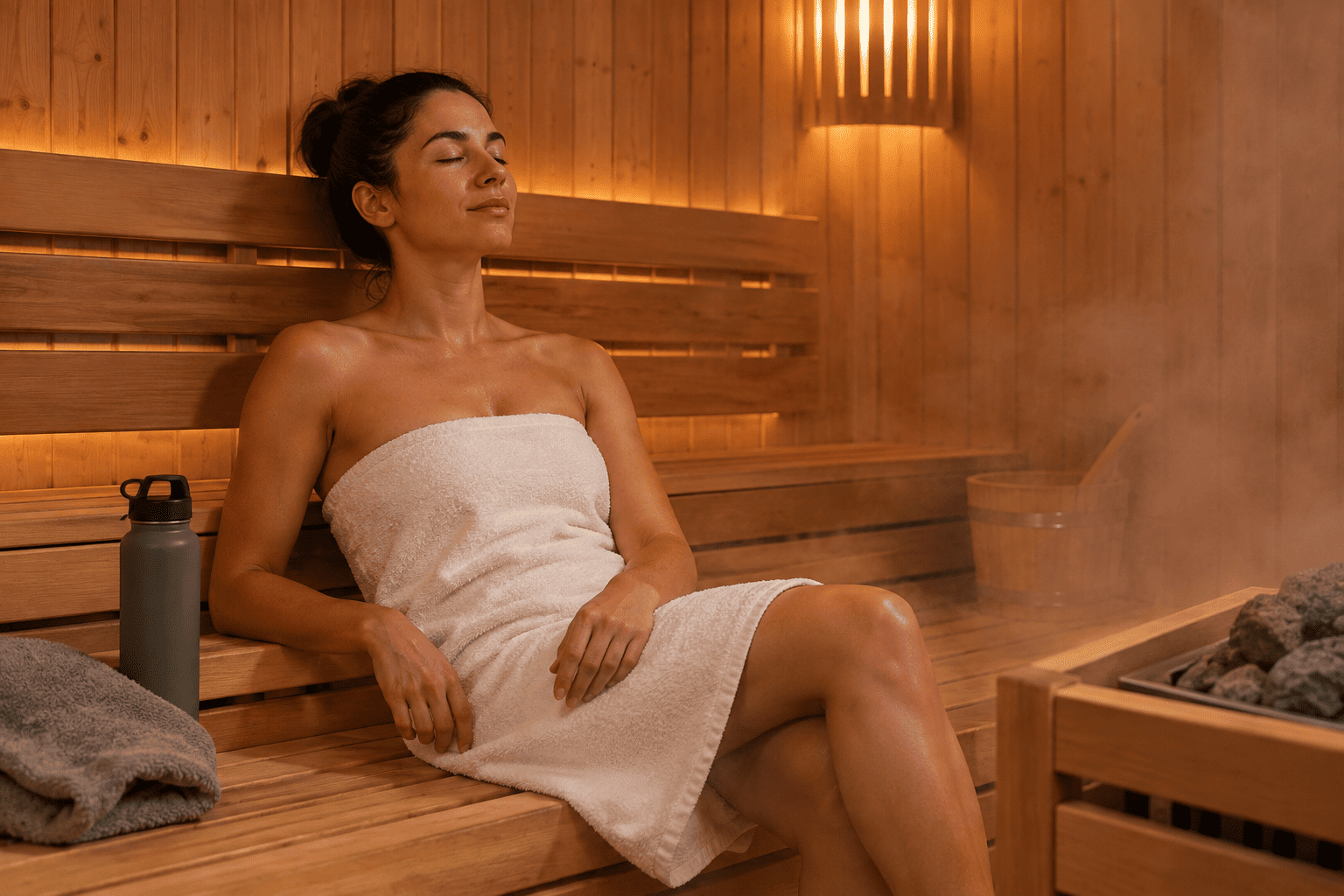
For most people, the sauna is better after a workout, not before. Using it first raises your body temperature and starts dehydrating you before you’ve lifted a thing, which tends to make your workout feel harder and weaker. Afterwards, once you’ve cooled down a little and had some water, a 10 to 15 minute sauna session is a relaxing way to finish, and regular sauna use has some genuinely interesting health research behind it.
I only started using a sauna when my gym membership came with one, and for the first few weeks I was doing it completely wrong. I’d sit in it before my workout to “warm up,” then wonder why my legs felt like jelly during squats. Switching it to the end of my session made a huge difference, and it’s become my favourite ten minutes of the week.
This guide explains why timing matters, what a post-workout sauna can and can’t do for you, how long to stay in, and the safety rules that matter most when you’re new to it.
At a glance
- Best timing: after your workout, following a short cool-down
- Beginner session: 5 to 10 minutes, building to 15 to 20
- Before a workout: generally not recommended, especially before strength or hard cardio
- Drink: water before, and plenty afterwards
- Real benefits: relaxation, possibly less soreness, and links to heart health with regular use
- What it won’t do: burn fat, “detox” you, or replace a proper warm-up
- Skip it if: you feel dizzy, have been drinking alcohol, or have a heart condition without medical advice
Sauna before or after a workout: the short answer
| Sauna before a workout | Sauna after a workout | |
|---|---|---|
| Effect on performance | Often worse, as you start warm and slightly dehydrated | No effect, since the workout is already done |
| Hydration | You lose fluid before you start sweating from exercise | You can plan your rehydration around it |
| Energy | Can leave you feeling relaxed and sluggish | Relaxation is welcome at the end of a session |
| Safety | Adds heat stress on top of exercise stress | Safer once you’ve cooled down and had water |
| Best for | A very gentle session on a cold day, if at all | Almost everyone |
The simple rule I follow: work first, heat second.
Why after a workout usually makes more sense
A good workout already raises your body temperature, your heart rate and how much you sweat. Your body is working hard to cool itself down. Adding a sauna on top of that at the end, once you’ve had a few minutes to recover, is manageable for most healthy people. Adding it at the start means you begin your workout already hot, already sweating and already a little dehydrated.
There’s also the energy side. A sauna is deeply relaxing. That calm, heavy, slightly sleepy feeling is lovely at the end of a session. It’s the opposite of what you want before you try to push yourself through a set of push-ups or a HIIT circuit.
And practically, it just fits better. You’re already sweaty, you’re already heading for a shower, and you’ve got a few minutes to sit and let your mind switch off. It turns the end of a workout into something you look forward to, which honestly helped my consistency more than I expected.
Why a sauna before a workout can backfire
It can make you weaker and slower
When your body is hot, it sends more blood towards your skin to release heat. That’s blood that isn’t going to your working muscles. Your heart has to work harder to meet both demands, which is why exercising in heat always feels harder than exercising in cool conditions. Starting a workout straight out of a sauna puts you in that position from the first minute.
You start already dehydrated
A sauna session can make you lose a noticeable amount of fluid through sweat. Even mild dehydration can make exercise feel harder, reduce how long you can keep going and increase the chance of feeling dizzy or getting a headache. Combining sauna sweat and workout sweat without rehydrating in between is a recipe for feeling rough.
A sauna isn’t a warm-up
This was my mistake. A sauna warms your skin and makes you feel loose, but it doesn’t prepare your body for exercise the way a real warm-up does. A proper warm-up gradually raises your heart rate, moves your joints through the ranges you’re about to use, and rehearses the movements. Sitting still in heat does none of that. If you want your muscles ready, five to ten minutes of movement works far better. My warm-up routine takes about that long.
When a short sauna before exercise is okay
There are a few situations where a brief sauna before exercise is reasonable for healthy people:
- Before gentle stretching or mobility work, where you’re not trying to perform
- For just a few minutes on a very cold day, followed by a proper warm-up
- Before a light swim, where the water cools you down quickly
Even then, keep it short, drink water first, and don’t do it before anything heavy or intense.
Benefits of a sauna after a workout
Sauna research is genuinely interesting, but it’s also easy to overstate. Here’s what the evidence actually suggests, with honest notes on how strong it is.
Relaxation and stress relief
This is the most consistent benefit, and the one almost everyone notices straight away. Heat is calming. A sauna gives you a few quiet minutes with no phone, which is rare. Many people find it helps them unwind after training and feel more relaxed for the rest of the evening.
It may help you sleep
A lot of regular sauna users report sleeping better, especially after evening sessions. The research on this is still limited, so I wouldn’t call it proven, but it fits with how relaxing heat feels. If you work out in the evening and struggle to wind down, it’s worth noticing whether a sauna makes a difference for you.
It might ease muscle soreness a little
Heat increases blood flow and can make stiff muscles feel looser, and some small studies suggest heat after exercise may reduce how sore people feel in the following days. The evidence is limited and mixed, though, so think of it as a nice possible bonus rather than a recovery tool you can rely on. Sleep, food and sensible training matter far more. My guide on how to reduce muscle soreness covers what helps most.
Regular sauna use is linked to heart health
This is where the research gets really interesting. A large study of more than 2,300 middle-aged Finnish men, published in JAMA Internal Medicine in 2015, followed them for around 20 years. Men who used a sauna four to seven times a week had a lower risk of fatal heart problems and death from any cause than men who used it once a week.
It’s important to be clear about what that study can and can’t show. It was observational, which means it found an association, not proof that saunas caused the difference. People who use saunas often may also be healthier or more relaxed in other ways. Still, it’s a big study with long follow-up, and it’s one reason sauna use has attracted so much scientific interest.
Sauna plus exercise may work better than exercise alone
A smaller but more direct piece of research came from a randomised trial in Finland published in 2022. Adults who added a 15-minute sauna session after exercising three times a week for eight weeks saw bigger improvements in fitness and systolic blood pressure than people who did the same exercise without the sauna. It was a small study, so it needs confirming, but it’s encouraging, and it matches the idea that a post-workout sauna fits naturally with regular training.
Heat adaptation for endurance
Some endurance athletes use regular sauna sessions after training to help their bodies adapt to heat, which may help when they race in warm conditions. For most beginners this isn’t a priority, but if you’re training for a summer event, it’s one of the reasons a post-run sauna habit might be useful.
What a sauna won’t do
There are a lot of claims floating around about saunas. Here are the common ones that don’t hold up.
| Claim | The reality |
|---|---|
| “A sauna burns fat” | The weight you lose in a sauna is water from sweating. It comes straight back when you drink. |
| “You sweat out toxins” | Your liver and kidneys handle that job. Sweat is almost entirely water and salt. |
| “It replaces a cool-down” | You still need to let your heart rate come down gradually before the heat. |
| “More time equals more benefit” | Longer sessions mostly increase the risk of dizziness and dehydration. |
| “It’s a good way to lose weight for a weigh-in” | Deliberately dehydrating yourself is risky and isn’t real weight loss. |
If fat loss is your goal, the sauna is a pleasant extra at best. Your eating, daily movement and consistent training do the real work. My guide to home workouts for weight loss focuses on the things that actually move the needle.
How long should you sit in a sauna after a workout?
Start short. Seriously. The heat can feel manageable for the first few minutes and then catch up with you quite suddenly, especially after exercise.
| Experience | Session length | How often |
|---|---|---|
| First few sessions | 5 to 10 minutes | 1 to 2 times a week |
| Getting used to it | 10 to 15 minutes | 2 to 3 times a week |
| Regular user | 15 to 20 minutes | Up to 4 or more times a week |
| Anyone, any time | Leave immediately if you feel dizzy, sick or unwell | Always |
Most traditional saunas run somewhere around 70 to 100°C with low humidity. Infrared saunas usually run cooler, often around 45 to 65°C, which many beginners find easier to tolerate for longer.
Sitting on a lower bench makes a big difference too. Heat rises, so the top bench is much hotter than the bottom one. I always start on the lowest bench for the first few minutes, then move up if I’m feeling good.
Some people split their time into two or three shorter rounds, with a lukewarm shower and a few minutes of rest in between. That’s a good way to enjoy a longer total session without overheating.
How to use a sauna after a workout, step by step
- Cool down first. Spend 5 to 10 minutes walking easily or stretching so your heart rate comes down. Going straight from your hardest set into the sauna is when people feel faint.
- Drink water. Have a good glass of water before you go in. If it was a long or sweaty workout, have a bit more.
- Rinse off. A quick shower is good sauna etiquette and helps you feel more comfortable.
- Take a towel. Sit on it, both for hygiene and because the wood can get hot.
- Start on a low bench. Stay there for your first few minutes.
- Keep it short. Five to ten minutes for your first sessions, building up over time.
- Get out slowly. Sit up for a moment before standing, then step out carefully. Blood pressure can drop when you stand quickly.
- Cool off gradually. A lukewarm or cool shower feels great. Sit down for a few minutes afterwards.
- Rehydrate. Drink water over the next hour. If you’ve sweated a lot, a meal or snack with a little salt helps replace what you’ve lost.
If you’re not sure how much water you should be drinking day to day, the water intake calculator gives you a personal starting point.
Infrared sauna before or after a workout?
The same timing logic applies to infrared saunas: after is usually better. Infrared saunas heat your body more directly and run at lower air temperatures, so they tend to feel gentler, but you still get hotter and still sweat, which isn’t ideal before a hard session.
Because they’re cooler, some people use a short infrared session before light mobility or yoga work. That’s generally fine for healthy people. For strength training, HIIT or running, I’d still save it for afterwards.
Steam rooms and hot tubs after a workout
Steam rooms and hot tubs follow the same basic rules as a sauna.
- Steam rooms run at lower temperatures than saunas, but the very high humidity means your sweat can’t evaporate to cool you, so they often feel just as intense. Keep sessions short.
- Hot tubs are relaxing after a workout and the water can feel great on tired legs. Keep the temperature moderate, limit sessions to around 15 minutes, and get out if you feel lightheaded.
For all three, cool down first, hydrate, and don’t combine them with alcohol.
Sauna vs cold plunge after a workout
Cold water immersion, like ice baths or cold plunges, has become popular for recovery, and some people alternate between hot and cold. The two do quite different things.
| Sauna after a workout | Cold plunge after a workout | |
|---|---|---|
| How it feels | Relaxing, calming | Intense, energising |
| Possible benefits | Relaxation, possible soreness relief, heart health links with regular use | May reduce soreness after very hard sessions |
| Main downside | Dehydration and dizziness if overdone | Research suggests regular cold immersion straight after strength training may reduce muscle gains |
| Best for | Most people, most sessions | Athletes recovering between competitions or very hard sessions |
That last point is worth knowing if you’re trying to build muscle. Some studies have found that routinely taking ice baths immediately after strength training can blunt the adaptations you’re training for. A sauna doesn’t seem to carry that same concern, which is another reason it’s a good default choice after lifting.
A simple weekly sauna workout plan
Here’s an example of how to build sauna sessions into a normal training week without overdoing it.
| Day | Workout | Sauna |
|---|---|---|
| Monday | Full body strength workout | 10 minutes after cool-down |
| Tuesday | Brisk walk | None |
| Wednesday | HIIT or cardio session | 10 to 15 minutes after cool-down |
| Thursday | Rest or stretching | Optional short session |
| Friday | Full body strength workout | 10 to 15 minutes after cool-down |
| Saturday | Longer walk or bike ride | Optional |
| Sunday | Rest | None |
For the workouts themselves, a routine like my full body workout for beginners or beginner cardio exercises pairs well with this pattern. On rest days, a gentle walk and some stretching do more for recovery than extra heat. I cover a few more ideas in my guide on what to do on rest days.
Who should be careful with saunas
Saunas are safe for most healthy adults when used sensibly, but they do put real stress on your heart and circulation. Talk to your doctor before using a sauna if any of these apply to you:
- You have a heart condition, including recent heart problems, chest pain or an irregular heartbeat
- You have very high or very low blood pressure
- You’re pregnant or trying to get pregnant
- You take medication that affects your heart rate, blood pressure or fluid balance
- You have a condition that affects how you regulate temperature or sweat
- You’re prone to fainting or feeling dizzy when you stand up
- You’re recovering from an illness, fever or a recent injury with swelling
And for everyone:
- Never use a sauna after drinking alcohol. Alcohol plus heat plus dehydration is a genuinely dangerous combination.
- Don’t go in if you’re already dehydrated or feeling unwell after your workout.
- Don’t fall asleep in there. Set a timer.
- Don’t use it alone for long sessions if you’re new to it.
Signs you should get out immediately
Leave the sauna straight away, sit down somewhere cool and drink water if you notice any of these:
- Feeling dizzy, faint or lightheaded
- Nausea or feeling sick
- A headache that’s building
- Your heart racing or pounding uncomfortably
- Confusion or feeling unusually weak
- Chills or goosebumps despite the heat
If symptoms don’t settle within a few minutes of cooling down, or you have chest pain or trouble breathing, get medical help. If you often feel lightheaded after exercise even without a sauna, it’s worth looking at how much you’re eating and drinking before training. My guide on what to eat before a workout covers the basics.
My simple routine
For what it’s worth, here’s what I actually do now, after plenty of trial and error. I finish my workout, walk around slowly for about five minutes, and drink a big glass of water. Then a quick shower, ten to twelve minutes on the middle bench, a cool shower, and another glass of water while I sit for a few minutes before getting dressed.
It’s not complicated, and I don’t do it expecting miracles. It’s just a calm, enjoyable way to end a workout, and anything that makes me look forward to training is worth keeping.
Frequently asked questions
Is it better to use a sauna before or after a workout?
After is better for most people. Using a sauna before exercise raises your body temperature and causes fluid loss before you start, which can make your workout feel harder and less effective. After your workout, once you’ve cooled down and had some water, a sauna is a relaxing way to finish.
What are the benefits of a sauna after a workout?
The most reliable benefit is relaxation. A post-workout sauna may also ease muscle soreness slightly, though the evidence is limited. Regular sauna use has been linked to heart health in long-term research, and a small 2022 trial found adding a sauna after exercise improved fitness and blood pressure more than exercise alone.
How long should I sit in a sauna after a workout?
Beginners should start with 5 to 10 minutes and build up gradually to 15 to 20 minutes as they get used to the heat. Always cool down for a few minutes after exercise before going in, and leave straight away if you feel dizzy or unwell.
Does sitting in a sauna after a workout burn fat?
No. The weight you lose in a sauna is water lost through sweating, and it returns as soon as you rehydrate. A sauna can be a pleasant part of a healthy routine, but fat loss comes from your overall eating and activity.
Should I shower before or after the sauna?
Both is ideal. A quick rinse before the sauna is good hygiene, and a lukewarm or cool shower afterwards helps you cool down gradually and feels refreshing. Avoid jumping into very cold water if you’re new to saunas or feel lightheaded.
Is an infrared sauna before or after a workout better?
After is still better for strength training, HIIT or running. Infrared saunas run cooler and feel gentler, so a short session before light stretching or yoga is generally fine for healthy people, but you’ll still get hot and sweat.
Can I use the sauna every day after working out?
Many healthy people use a sauna most days without problems, as long as sessions are short, they stay well hydrated and they avoid alcohol. Build up gradually, and speak to your doctor first if you have a heart condition, blood pressure problems, are pregnant or take regular medication.
Is a sauna or an ice bath better after a workout?
They do different things. A sauna is relaxing and linked to heart health with regular use. Ice baths may reduce soreness after very hard sessions, but research suggests using them routinely straight after strength training may reduce muscle gains, so a sauna is often the better everyday choice.