What to Eat Before a Workout: Timing, Easy Snacks and Simple Meals
The best thing to eat before a workout is something with easy-to-digest carbohydrates and a little protein, eaten 30 minutes to 3 hours before you train. A banana, a slice of toast with peanut butter or a pot of Greek yogurt with fruit all work well. The bigger the meal, the longer you should wait. And for a short, easy workout, you may not need to eat anything at all.
When I started working out, I made both classic mistakes. Some days I trained on nothing and felt dizzy and weak halfway through. Other days I ate a big lunch and tried to do squats an hour later, which ended exactly how you’d expect. It took me a lot of trial and error to find a simple routine that works, and honestly, most of what I learned could fit on a sticky note.
This guide is that sticky note, expanded. It covers how long to wait after eating, what a good pre-workout snack actually looks like, 20 easy options, how many carbs you need, and what to avoid so your stomach behaves.
At a glance
- Big meal: eat 3 to 4 hours before training
- Small meal: 1 to 3 hours before
- Light snack: 30 to 60 minutes before
- Best choices: easy carbs plus a little protein, low in fat and fibre
- Easy go-tos: banana, toast with peanut butter, yogurt with fruit, oats
- Under 45 minutes of easy exercise: eating first is optional
- Don’t forget: drink water in the hours before you train
Do you even need to eat before a workout?
Not always. This surprises a lot of beginners, because fitness content can make pre-workout nutrition sound like a science project.
Your body stores carbohydrate in your muscles and liver as glycogen. If you’ve eaten normally in the last day, you have enough stored energy to get through a typical 20 to 45 minute home workout, a brisk walk or a gentle bike ride without eating right beforehand. Plenty of people train first thing in the morning before breakfast and feel completely fine.
Eating before a workout starts to matter more when:
- Your session is longer than about an hour
- It’s hard, like HIIT, heavy strength work or a long run
- It’s been more than four or five hours since you last ate
- You tend to feel dizzy, shaky or weak when you exercise hungry
- You’re trying to perform your best, like beating a personal record
So the real question isn’t “must I eat?” It’s “will eating help me train better today?” If you feel great training on an empty stomach, that’s fine. If you feel flat and tired, a small snack will probably make a noticeable difference.
If you have diabetes, low blood pressure, a history of fainting, or any medical condition that affects your blood sugar, don’t exercise on an empty stomach without advice from your doctor. The timing of meals and medication can matter a lot for you.
How long before a workout should you eat?
This is the question I get asked most, and the answer depends on how much you eat. Bigger meals take longer to digest, and exercising while your stomach is still busy is what causes cramps, nausea and that heavy, sluggish feeling.
| What you eat | Wait this long | Example |
|---|---|---|
| Large meal | 3 to 4 hours | Chicken, rice and vegetables, or a big pasta dish |
| Small meal | 1 to 3 hours | A sandwich, a bowl of oats with fruit, eggs on toast |
| Light snack | 30 to 60 minutes | A banana, yogurt, a couple of rice cakes |
| Very small top-up | 15 to 30 minutes | A few dates, a small glass of juice, a handful of raisins |
These are starting points, not rules. Some people can eat a sandwich 45 minutes before a run with no trouble. Others need two full hours. Your body will tell you pretty quickly which camp you’re in.
If you tend to get stomach cramps or feel sick during exercise, try eating a little earlier or a little less. My guide on stomach pain after a workout goes through the most common causes if it keeps happening.
What makes a good pre-workout snack
A good pre-workout snack does three jobs. It tops up your energy, it doesn’t upset your stomach, and it doesn’t leave you feeling heavy. That usually means:
- Mostly carbohydrates. Carbs are your body’s preferred fuel for harder exercise, and they digest relatively quickly.
- A little protein. Protein helps keep you full and gives your muscles building blocks, but a huge portion before training can sit heavily.
- Low in fat. Fat slows digestion. A little is fine, like a spoon of peanut butter, but a greasy meal right before training often isn’t.
- Low to moderate fibre. Fibre is great for you most of the time, but a big bowl of beans or bran right before a workout can cause bloating and gas.
- Familiar. Workout day isn’t the day to try a new food.
The closer you are to your workout, the simpler your snack should be. Three hours out, a balanced meal is perfect. Thirty minutes out, a banana is better than a salad.
How many carbs should you eat before a workout?
For most beginners doing workouts under an hour, you don’t need to count carbs at all. A normal snack or meal covers it. But if you like numbers, or you’re doing longer or harder sessions, these ranges are a useful guide.
| Type of session | Carbs to aim for | When |
|---|---|---|
| Easy session under 45 minutes | Optional, around 15 to 30 g if you’re hungry | 30 to 60 minutes before |
| Moderate or hard session of 45 to 90 minutes | Around 30 to 60 g | 1 to 3 hours before |
| Long or very hard session over 90 minutes | About 1 g per kg of body weight or more | 2 to 4 hours before |
To put those numbers in perspective, a medium banana has around 25 to 30 g of carbohydrate. A slice of wholemeal bread has around 15 g. A 40 g serving of oats has roughly 25 g.
Endurance athletes training for hours at a time often eat considerably more than this, sometimes 1 to 4 g of carbs per kg of body weight in the hours before a long event. That’s not something a beginner doing a 30-minute home workout needs to worry about.
If you’re trying to figure out your total daily energy needs, which matter far more than the exact timing of any single snack, the calorie calculator is a good place to start.
20 good pre-workout snacks
Here are snacks that work well for most people. The carb values are approximate, and portion sizes make a big difference, so treat them as a rough guide.
| Snack | Approx. carbs | Best timing before training |
|---|---|---|
| Medium banana | 27 g | 30 to 60 minutes |
| Banana with 1 tbsp peanut butter | 30 g | 45 to 60 minutes |
| Slice of toast with honey or jam | 30 g | 30 to 60 minutes |
| Slice of toast with peanut butter | 17 g | 60 minutes |
| Greek yogurt (150 g) with berries | 15 to 20 g | 45 to 60 minutes |
| Small bowl of oats (40 g) with milk | 35 g | 60 to 90 minutes |
| Two rice cakes with jam | 25 g | 30 to 45 minutes |
| Apple | 25 g | 30 to 60 minutes |
| Apple slices with a little nut butter | 28 g | 45 to 60 minutes |
| Two Medjool dates | 35 g | 15 to 30 minutes |
| Small handful of raisins (30 g) | 22 g | 15 to 30 minutes |
| Glass of milk | 12 g | 30 to 60 minutes |
| Small bowl of cereal with milk | 35 g | 45 to 60 minutes |
| English muffin with a little cheese | 28 g | 60 minutes |
| Pitta bread with hummus | 30 g | 60 to 90 minutes |
| Fruit smoothie made with yogurt | 30 to 40 g | 30 to 60 minutes |
| Cottage cheese with pineapple | 18 g | 45 to 60 minutes |
| Boiled egg and a slice of toast | 15 g | 60 to 90 minutes |
| Small baked sweet potato | 25 g | 60 to 90 minutes |
| Plain cereal bar or oat bar | 20 to 30 g | 30 to 60 minutes |
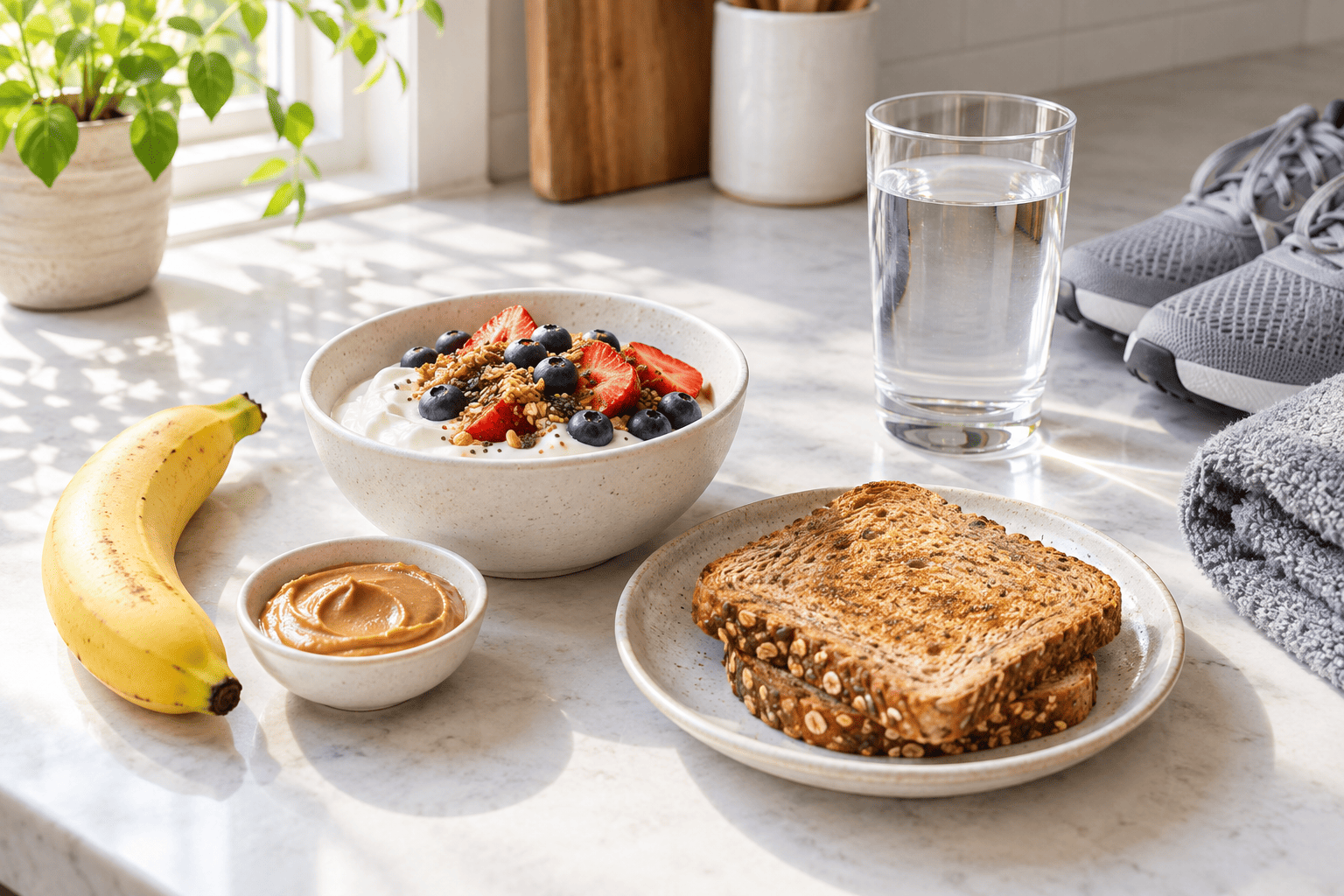
My personal go-to, on almost every workout day, is a banana with a spoon of peanut butter about 45 minutes before. It’s cheap, it’s easy, and I’ve never had it upset my stomach.
Is a banana a good pre-workout snack?
Yes, and there’s a reason it’s the classic choice. Bananas are mostly easy-to-digest carbohydrate, they’re portable, they come in their own wrapper and they rarely cause stomach trouble. They also contain potassium, which is one of the minerals you lose in sweat.
Eat a banana on its own 30 minutes before a workout if you want quick energy. Add a spoon of peanut butter if you’re eating an hour before and want it to last a bit longer. A slightly riper banana digests a little faster than a green one, which can make it easier on your stomach close to a session.
Is Greek yogurt good before a workout?
Greek yogurt is a good pre-workout option, especially if you’re training within an hour or so. It gives you protein plus some carbohydrate, and most people digest it easily. On its own it’s fairly low in carbs, so adding fruit, honey or a small handful of granola makes it better fuel for a harder session.
If dairy doesn’t agree with you, a lactose-free yogurt or a plant-based yogurt with added protein works the same way.
Is oatmeal a good pre-workout meal?
Oats are an excellent pre-workout meal if you give them a bit of time. They’re a slower-digesting carbohydrate, which means steady energy. The fibre that makes them so filling is also what makes them better one to two hours before a workout rather than right beforehand. A bowl of porridge with banana slices 90 minutes before a morning workout is hard to beat.
Are eggs good before a workout?
Eggs are a great source of protein, but on their own they have almost no carbohydrate and they take a while to digest. So they work best as part of a small meal eaten a couple of hours before training, like scrambled eggs on toast, rather than as a snack right before you start.
Is coffee okay before a workout?
For most healthy adults, a cup of coffee before a workout is fine, and many people find it helps them feel more alert and energetic. The key things are to know how you personally respond to caffeine, to avoid it late in the day if it affects your sleep, and to have it with a little food if coffee on an empty stomach makes you feel jittery or queasy. If you have a heart condition, high blood pressure or you’re sensitive to caffeine, check with your doctor.
Easy pre-workout meals (1 to 3 hours before)
If you’re training in the afternoon or evening, a proper meal a few hours before is usually better than a snack. Here are some simple, balanced options.
- Chicken or tofu with rice and a small portion of vegetables
- A turkey, chicken or tuna sandwich on wholemeal bread
- Scrambled eggs on toast with a piece of fruit
- Porridge made with milk, topped with banana and a drizzle of honey
- Pasta with a tomato-based sauce and a little lean protein
- A baked potato with beans or cottage cheese
- A wrap with hummus, chicken and salad
- Overnight oats with yogurt and berries
The pattern is always the same: a good portion of carbohydrate, a moderate amount of protein, and not too much fat or fibre. Save the creamy sauces, the fried food and the huge salads for after your workout.
What to eat for different types of workout
| Workout type | Do you need to eat? | Good choice |
|---|---|---|
| A 20 to 30 minute walk | No | Nothing, or a piece of fruit if hungry |
| Home strength workout under 45 minutes | Optional | Banana, or yogurt with fruit |
| HIIT or a hard circuit | Helpful | Toast with honey, rice cakes with jam, 45 to 60 minutes before |
| Strength training for an hour or more | Yes | Small meal like eggs on toast 1 to 2 hours before |
| A run of an hour or more | Yes | Oats or a bagel 2 hours before, plus a banana 30 minutes before |
| Early morning workout | Depends on you | A banana or a small glass of juice, or nothing if you feel fine |
For HIIT especially, I find a small carb-based snack makes a big difference to how hard I can push the intervals. If you’re doing short, intense sessions like the ones in my beginner HIIT workout, it’s worth experimenting.
What to eat before an early morning workout
Morning workouts are tricky because you probably don’t want to wake up two hours early just to digest breakfast. You’ve got three good options:
- Train fasted. If your workout is short or easy and you feel fine, just have water and go. Eat breakfast afterwards.
- Have a tiny, fast snack. Half a banana, a few dates or a small glass of juice 15 to 30 minutes before is enough to take the edge off without sitting heavily.
- Eat a little the night before. If you train hard first thing, a slightly bigger carb-based dinner or a small snack before bed helps top up your energy stores.
I usually go with option 2. Half a banana while the kettle boils, then straight into my 10-minute morning workout. If you’re still deciding when to fit exercise into your day, my guide to the best time of day to work out might help.
What to eat before a workout to build muscle
If building muscle is your goal, the most important thing is getting enough protein across the whole day, not the exact minute you eat it. For most people trying to build muscle, a daily intake somewhere around 1.4 to 2 g of protein per kg of body weight is a commonly recommended range, spread fairly evenly across meals.
Having a meal or snack with around 20 to 30 g of protein in the few hours before or after a strength workout is a sensible habit, and it’s easy to do:
- Greek yogurt with fruit and a sprinkle of granola
- Eggs on toast
- A chicken or tuna sandwich
- A glass of milk and a banana
- Cottage cheese with fruit
If you want to know how much protein you need each day, my protein intake calculator works it out from your weight and goals.
What to eat before a workout if you’re trying to lose weight
This is where a lot of people accidentally undo their good work. If you’re trying to lose weight, you don’t need to add an extra snack before every workout. A 30-minute home workout burns a lot less than most people think, and a big smoothie or an energy bar can easily cancel it out.
Some simple guidelines:
- If your workout is short or easy, try training without a snack and see how you feel
- If you do eat first, keep it small, like a piece of fruit
- Time your normal meals around your workout rather than adding new ones
- Focus on your total daily intake, which matters much more than timing
For the bigger picture on combining exercise and eating for weight loss, my guide on home workouts for weight loss covers what actually makes a difference.
What not to eat before a workout
Everyone’s stomach is different, but these are the most common troublemakers in the hour or two before exercise.
| Food or drink | Why it can cause problems |
|---|---|
| Fried or greasy food | Fat slows digestion and can cause nausea and heaviness |
| Large portions of anything | Your stomach is still working when your muscles need blood flow |
| High-fibre foods like beans, lentils and bran | Can cause bloating, gas and cramps during exercise |
| Very spicy food | Can trigger heartburn and stomach discomfort |
| Fizzy drinks | Gas and bloating, especially during jumping or running |
| Sugar-free sweets and gum with sugar alcohols | Can cause stomach upset and a sudden need for the toilet |
| Large amounts of dairy (if you’re sensitive) | Bloating and discomfort for some people |
| Brand new foods | You don’t know how your body will react mid-workout |
If you regularly feel bloated during or after exercise, food choice before training is often part of the story. My guide on feeling bloated after a workout covers the other causes too.
Drinking before a workout
Food gets all the attention, but for most beginners, being properly hydrated matters just as much. Even mild dehydration can make a workout feel much harder than it should.
- Drink water regularly through the day, so you start your workout already hydrated
- Have a glass of water in the couple of hours before you train
- Sip a little more in the 15 to 30 minutes beforehand if you’re thirsty
- Don’t gulp a huge amount right before you start, which can cause sloshing and cramps
- For most workouts under an hour, water is all you need, not a sports drink
A simple check is the colour of your pee. Pale yellow is what you’re aiming for. If you’d like a personal daily target, the water intake calculator gives you one based on your weight and activity.
How to find what works for you
The truth is that the perfect pre-workout snack is the one that makes you feel good and that your stomach tolerates. You can only really find that through a bit of experimenting. Here’s the simple method I used.
- Pick one snack and one timing, like a banana 45 minutes before.
- Use it for three or four workouts.
- Notice how you feel: energy, stomach comfort and how hard you could push.
- If something’s off, change one thing, either the food or the timing.
- Once you find a combination that works, stick with it on workout days.
I kept a quick note on my phone for a couple of weeks: what I ate, when, and a score out of 10 for how the workout felt. It sounds a bit much, but it took the guesswork out very quickly. Now I don’t even think about it.
The main thing is not to overthink it. What you eat across the whole week matters far more than the snack you have before one workout. Get the basics right, find a snack you like, and put your energy into showing up consistently.
If you use protein powder, you might wonder whether a shake counts as a pre-workout snack. My guide on protein shakes before or after a workout explains when the timing matters and when it does not.
Frequently asked questions
What is the best thing to eat before a workout?
A snack or meal with easy-to-digest carbohydrates and a little protein works best for most people. Good examples are a banana with peanut butter, toast with honey, Greek yogurt with fruit, or a small bowl of oats. Eat snacks 30 to 60 minutes before and meals 1 to 3 hours before.
How long should I wait to work out after eating?
Wait about 3 to 4 hours after a large meal, 1 to 3 hours after a small meal, and 30 to 60 minutes after a light snack. If you feel sick or get cramps during exercise, try eating a little earlier or having a smaller portion.
Is it okay to work out on an empty stomach?
For most healthy people, a short or moderate workout on an empty stomach is fine, especially first thing in the morning. For longer or harder sessions, or if you feel dizzy or weak when training hungry, a small snack beforehand usually helps. People with diabetes or blood sugar problems should get medical advice first.
Is a banana a good pre-workout snack?
Yes. A banana gives you around 25 to 30 grams of easy-to-digest carbohydrate, is gentle on most stomachs and is easy to carry. Eat it 30 to 60 minutes before training, and add a spoon of peanut butter if you want the energy to last longer.
How many carbs should I eat before a workout?
For a workout under 45 minutes, carbs are optional, with 15 to 30 grams being plenty if you’re hungry. For 45 to 90 minutes of moderate to hard exercise, around 30 to 60 grams 1 to 3 hours before works well for most people.
What should I eat before a morning workout?
If your workout is short and easy, you can just drink water and eat breakfast afterwards. If you want something, have a small, fast-digesting snack like half a banana, a few dates or a small glass of juice 15 to 30 minutes before.
Should I eat protein before a workout?
A moderate amount of protein before a workout is helpful, especially if you want to build muscle, but your total protein intake across the day matters more than exact timing. Aim for a meal or snack with around 20 to 30 grams of protein within a few hours of strength training.
What foods should I avoid before exercising?
Avoid greasy or fried food, very large portions, high-fibre foods like beans, very spicy food, fizzy drinks and anything new in the hour or two before a workout. These are the most common causes of bloating, cramps and nausea during exercise.
Source: Journal of the International Society of Sports Nutrition, Position stand: nutrient timing