Why Do I Weigh More After Working Out? 8 Real Reasons (and What to Do)
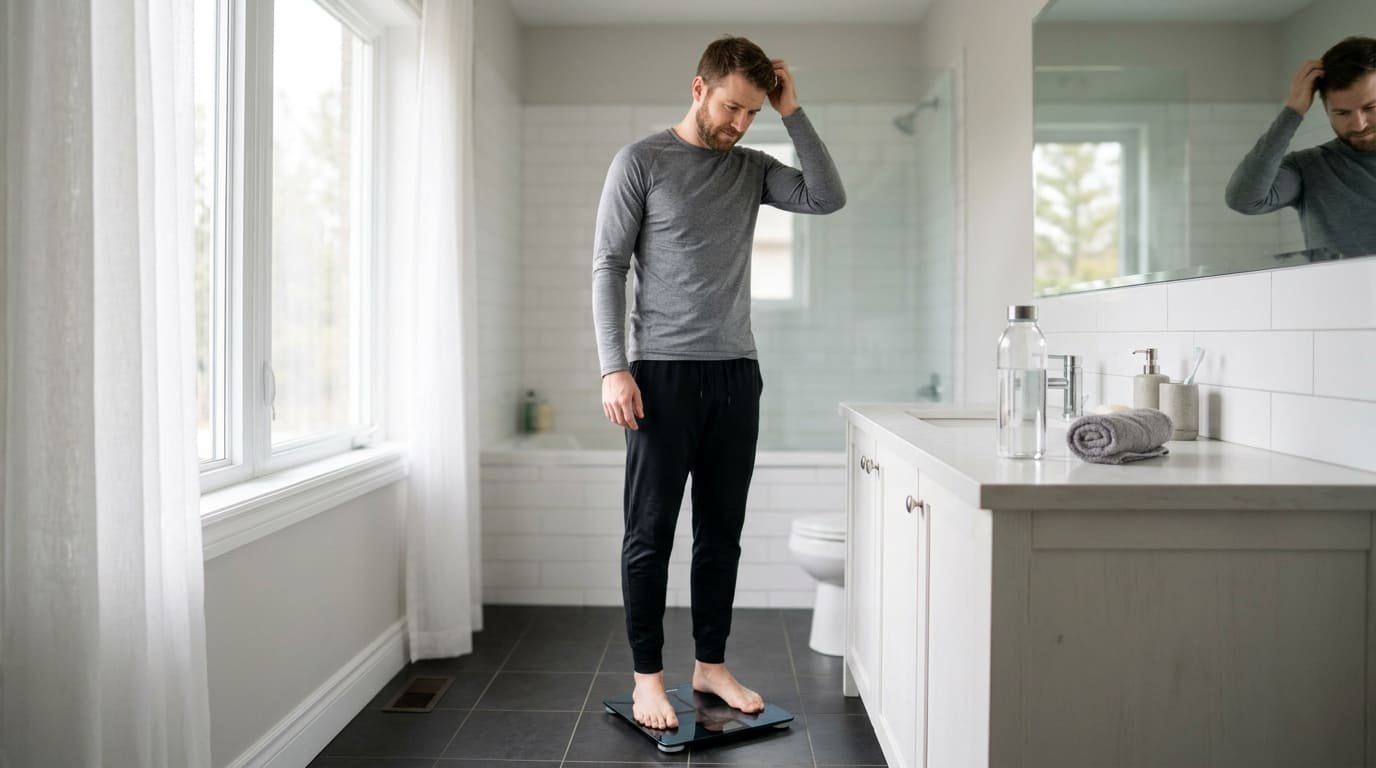
Why do I weigh more after working out? It is one of the most frustrating moments for anyone starting a new exercise routine. You have been walking, lifting or going to classes, you feel proud of yourself, and then you step on the scales and the number has gone up. Sometimes by a kilo or more.
If that has happened to you, take a breath. In almost every case, the extra weight is not fat. It is mostly water, along with a little food and the normal day-to-day ups and downs of body weight. Your body is responding to new exercise exactly as it should, and the scale is simply not good at telling the difference between water and fat.
This guide answers why do I weigh more after working out with the 8 real reasons, how long each one lasts, what the research says, and how to track your progress in a way that will not drive you mad.
At a glance
- Weighing more after exercise is very common, especially in the first few weeks
- Most of the increase is water, not fat
- Muscles hold extra fluid while they repair after new or harder exercise
- Each gram of stored glycogen (carbohydrate in muscle) is stored with roughly 3 grams of water
- Eating more after workouts, salt, hormones and digestion all add to daily swings
- Gaining real muscle happens slowly and is rarely the main cause of a quick scale increase
- Track trends over weeks, and use your waist measurement and how you feel, not a single weigh-in
First, daily weight changes are normal
Body weight naturally moves up and down by about 1 to 2 kg over a day, and sometimes more. Water, food in your stomach and gut, salt, sleep and hormones all play a part. A single weigh-in is a snapshot of that moment, not a measure of your progress.
| Factor | Typical effect on the scale |
|---|---|
| Food and drink still in your gut | Up to about 1 kg or more |
| Water from a salty meal | Several hundred grams to a kilo |
| Glycogen and water after a carb-rich day | Several hundred grams or more |
| Menstrual cycle | Often 1 to 2 kg in the days before a period |
| Muscle repair fluid after a hard workout | Several hundred grams, sometimes more |
| Real fat gain | Slow, roughly 7,700 kcal surplus per kg of fat |
Notice the last line. Gaining a kilo of fat needs a large calorie surplus, far more than most people eat in a day or two. A sudden overnight jump on the scale is almost never fat.
Why do I weigh more after working out? 8 reasons
1. Muscle repair and inflammation
When you do new or harder exercise, especially movements where muscles lengthen under load, like walking downhill, squats and lunges, you create tiny areas of muscle damage. This is normal and part of how muscles adapt. The repair process brings extra fluid into the muscles, and that fluid shows up on the scale.
A classic study had 26 young women perform 70 maximal eccentric contractions of the elbow flexors. Soreness, swelling, stiffness and strength loss were all measured every day for 11 days. The peak effects appeared between 24 and 96 hours after exercise, and most measures, including swelling, were back to normal by day 11.
That was a single arm, so the effect on body weight was tiny. But when you start working your whole body, especially big leg muscles, the extra fluid can add up. This is often the main reason for weight gain after starting exercise, and it usually settles within one to two weeks as your body adapts. Our guide on how to reduce muscle soreness explains this process.
2. Glycogen and water storage
Your muscles store carbohydrate as glycogen, which is your main fuel for harder exercise. When you start training regularly, your muscles adapt by storing more glycogen. And glycogen does not travel alone.
A study in trained cyclists measured muscle water and glycogen during recovery after prolonged exercise in the heat. The researchers concluded that each gram of glycogen is stored with at least 3 grams of water, and possibly more when people drink plenty of fluid.
So if your muscles store a few hundred extra grams of glycogen as they adapt to training, you can gain a kilo or more of water weight along with it. This is a good sign. It means your muscles are better fuelled for your next workout.
3. Rehydrating after exercise
If you weigh yourself straight after a sweaty workout, you will often be lighter, because you have lost fluid. Then you drink to replace it, and the number goes back up. If you drink a lot, or eat a salty post-workout meal, you may briefly be heavier than before. Neither change is fat. Our water intake calculator gives a rough daily target.
4. Eating more
Exercise can increase your appetite, sometimes a lot. That is normal and often helpful, because your body needs fuel. But it means there is more food in your digestive system at any time, which adds weight on the scale. And if you regularly eat more than you burn, some real weight gain can follow over time.
A common trap is overestimating the calories burned in a workout, then eating more as a reward. Our guide on whether cardio helps you lose weight explains why exercise and eating need to work together.
5. Salt and carbohydrate
A meal high in salt or carbohydrate after a workout can make your body hold onto more water for a day or two. This is temporary and usually settles as you return to your normal eating pattern.
6. Hormones and stress
Hard training, poor sleep and stress raise stress hormones such as cortisol, which can affect fluid balance. For women, the menstrual cycle often causes water retention in the days before a period, which can coincide with a new training programme and make the scale look worse than it really is.
7. Bloating and digestion
Some people feel bloated after exercise, especially after high-intensity workouts, drinking a lot quickly or having a protein shake. Bloating can make you look and feel heavier for a few hours. Our guide on why you might feel bloated after working out covers the common causes.
8. Gaining muscle (slowly)
Many people assume they have gained weight because they have built muscle. That can be part of the story over months, especially for beginners doing strength training. But muscle builds slowly. Even beginners gaining muscle well might add a few hundred grams to a kilo a month at best. So if you gained weight after a workout or in your first week, muscle is not the main reason. Over months, though, building muscle while losing fat can mean the scale moves slowly even as your body changes a lot.
Summary: why the scale goes up

| Reason | How much weight | How long it lasts |
|---|---|---|
| Muscle repair fluid | Several hundred grams or more | About 1 to 2 weeks with new training |
| Glycogen and water | Up to a kilo or more | Ongoing, a sign of better fuelled muscles |
| Rehydration | A few hundred grams to a kilo | Hours |
| More food in the gut | Up to a kilo or more | Hours to a day |
| Salt and carbohydrate | Several hundred grams | 1 to 3 days |
| Hormones and stress | Varies, often up to 1 to 2 kg | Days |
| Bloating | Varies | Hours |
| Muscle gain | Slow, small | Months |
How long will you weigh more after working out?
For most people starting a new routine, the extra water weight settles within one to three weeks, as your muscles get used to the work and the inflammation calms down. The glycogen-related water may stay, but that is a good sign, and it is a one-time shift rather than continuing gain.
If you change your routine, for example adding a new type of exercise or increasing intensity, you may see a small bump again. This is completely normal.
Why do I weigh more after working out? Track progress the right way
| Method | Why it helps | How often |
|---|---|---|
| Weekly average weight | Smooths out daily swings | Weigh daily or a few times a week, compare weekly averages |
| Waist measurement | Shows changes in body fat around the middle | Every 2 to 4 weeks |
| How clothes fit | Simple, practical measure | Ongoing |
| Progress photos | Show changes the scale hides | Monthly, same light and clothes |
| Fitness markers | Show real improvement | Weekly: more reps, longer walks, faster pace |
| Energy, sleep and mood | Show how your body is coping | Daily |
If you weigh yourself, do it first thing in the morning, after using the toilet, before eating or drinking, in similar clothes. Then look at the trend over 2 to 4 weeks, not day to day. Our guide on how to measure your waist and hips shows how to do it consistently.
What to do if you gained weight after workout sessions
- Do not panic or stop exercising. The water weight is temporary and a sign of adaptation
- Keep a consistent routine. Your body adapts faster when training is regular
- Drink normally. Cutting water does not help and can make you feel worse
- Eat sensibly. Include protein and vegetables, and be realistic about calories burned
- Sleep well. Recovery and fluid balance improve with good sleep
- Track trends, not single weigh-ins
- Give it 3 to 4 weeks before judging whether your plan is working
If your goal is weight loss
Exercise is excellent for health, fitness, mood and keeping weight off, but weight loss mainly comes from a sustained calorie deficit. Combining regular activity with sensible eating works best. Walking is a great foundation, because it is easy to do often without large increases in appetite. Our walking for weight loss guide has a beginner plan.
If you are eating more after workouts, try:
- Having a planned snack or meal after exercise, with protein and fibre
- Drinking water first, as thirst is sometimes mistaken for hunger
- Not treating workouts as a reason for big rewards
- Checking portion sizes for a week or two
Our guide on whether to have a protein shake before or after a workout covers post-exercise nutrition.
Weight gain after starting exercise with weights
Strength training in particular can cause noticeable early scale increases, because it creates more muscle repair, more glycogen storage and, over months, some muscle gain. Many people find their waist measurement goes down while the scale stays the same or rises slightly. That is often a sign of a healthier body composition. If you are new to lifting, our guide on not being sore after a workout explains what soreness does and does not tell you about progress.
When to check with a doctor
Most post-workout weight changes are harmless. But see a doctor if you notice:
- Rapid, unexplained weight gain over a few days, especially with swelling in your legs or ankles
- Shortness of breath, particularly when lying down
- Swelling that leaves a dent when pressed
- Weight gain with very dark urine, or muscle pain that is severe and out of proportion to your workout
Severe muscle pain with dark urine after unusually hard exercise can be a sign of a rare but serious condition called rhabdomyolysis and needs urgent medical attention.
This article is general information, not medical advice. See our medical disclaimer.
Common myths
| Myth | The reality |
|---|---|
| Exercise made me fat | Quick weight increases are almost always water, food and normal swings |
| I gained a kilo of muscle this week | Muscle builds far more slowly |
| I should stop drinking water to lose the water weight | Dehydration can make your body hold more fluid later and hurts performance |
| The scale is the best measure of progress | It cannot tell fat, muscle and water apart |
| If the scale goes up, my plan is not working | Look at trends over weeks and other measures |
A realistic example
Here is a typical pattern many beginners notice. In week one of a new walking and strength routine, the scale rises by around a kilo. In week two, it stays about the same, and the person feels frustrated. By week three or four, the water from muscle repair has settled, and the weekly average starts to drift down slowly, while their waist measurement shrinks a little and their workouts feel easier.
If you ask, “Why do I weigh more after working out when I am doing everything right?”, this pattern is usually the answer. The early bump is water and adaptation. The real progress shows up a few weeks later, as long as your eating supports your goal.
Why do I weigh more after working out as a woman?
All of the reasons in this guide apply to everyone. For women, the menstrual cycle adds another layer: many women notice water retention of 1 to 2 kg in the days before a period. If that overlaps with starting a new routine, the scale can jump noticeably. Compare your weight at the same point in your cycle each month for a fairer picture.
Daily weigh-ins vs weekly averages
| Approach | Pros | Cons |
|---|---|---|
| Daily weigh-in, look at each number | Lots of data | Emotional ups and downs, misleading |
| Daily weigh-in, use weekly average | Smooths out swings, shows the real trend | Needs a simple note or app |
| Weekly weigh-in, same day and time | Simple | One unusual day can skew the result |
| No scale, use measurements and photos | Less stress | Slower feedback on weight |
There is no single right way. If the scale makes you anxious, measurements, photos and fitness progress are excellent alternatives. If you like data, a weekly average is the fairest way to answer the question of whether you really weigh more after working out or whether it is just daily noise.
Can you reduce water weight after exercise?
You do not need to, because it is temporary and harmless. But a few habits help your body keep fluid balance steady:
- Drink regularly throughout the day rather than large amounts at once
- Keep salt at sensible levels, especially in processed foods
- Eat plenty of vegetables and fruit, which provide potassium
- Sleep well and manage stress
- Build up training gradually, which reduces big swings in muscle soreness
A quick checklist when the scale goes up
If you find yourself asking “why do I weigh more after working out?” again, run through this list:
- Did I start a new workout or train harder than usual in the last 3 days?
- Are my muscles sore?
- Did I eat a larger, saltier or more carb-heavy meal yesterday?
- Did I weigh myself at a different time of day or after eating?
- Am I near my period?
- Did I sleep badly or have a stressful few days?
- Have I been to the toilet as usual?
If you answered yes to any of these, the increase is almost certainly temporary. Check your weekly average again in a week or two.
Keeping the right mindset
It is easy to feel discouraged when you work hard and the scale goes the wrong way. Remember why you started exercising: better health, more energy, a stronger body, a calmer mind. Those benefits begin long before the scale moves. So the next time you wonder why do I weigh more after working out, remind yourself that your body is adapting, and keep going.
A note from me
If you take one thing from this page, let it be this: whenever you ask why do I weigh more after working out, remember that a higher number after a workout is feedback about water, not a verdict on your effort. Keep showing up, and judge your progress over weeks, not mornings.
The bottom line
So, why do I weigh more after working out? Mostly water, and that is the honest, reassuring answer. New or harder exercise causes muscle repair fluid, your muscles store more glycogen with water attached, and food, salt, hormones and digestion add to normal daily swings. Real fat gain needs a large calorie surplus and does not happen overnight, and muscle gain is slower still.
Keep exercising, stay consistent, eat sensibly and give it a few weeks. Track weekly averages, your waist measurement, how your clothes fit and how your fitness improves. In almost every case where people ask why do I weigh more after working out, the scale settles, and the progress you have been making becomes clearer.
Frequently asked questions
Why do I weigh more after working out, even when I eat well?
Mostly water. Muscle repair after new or harder exercise draws fluid into the muscles, and muscles store extra glycogen with water. Food, salt and hormones also cause normal day-to-day swings.
Is weight gain after starting exercise normal?
Yes. Many people see a small increase of 0.5 to 2 kg in the first couple of weeks. It is usually water and settles within one to three weeks.
How long does water weight last after a workout?
Fluid from muscle repair usually settles within a few days to two weeks. Glycogen-related water may stay, but that is a sign of better fuelled muscles rather than fat.
Did I gain muscle or fat after working out?
After a single workout or week, probably neither in a meaningful amount. Quick scale increases are almost always water and food. Muscle and fat change more slowly.
Should I weigh myself after a workout?
It is better to weigh yourself first thing in the morning, before eating or drinking. Weighing after a workout is affected by sweat loss and rehydration.
Does lifting weights make you gain weight?
It can cause a temporary increase from water and, over months, some muscle gain. Many people lose waist size while the scale stays similar.
Can soreness make you weigh more?
Yes. Sore muscles are repairing, and the repair process holds extra fluid in the muscle. This adds a little weight until the soreness and swelling settle.
Why do I weigh more after a rest day?
Rest days often mean more stored glycogen and water, and sometimes more food or salt. It is normal and not a reason to skip rest days.
How should I track weight loss progress?
Use weekly average weight, your waist measurement every few weeks, how your clothes fit, progress photos and fitness improvements. Avoid judging progress from a single weigh-in.
What’s next?
Reading is the easy part. Pick one of these and do it today.